HISTORICAL RECORD
Historical Sources and Evidence
These sources provide historical context. They do not necessarily support the quantities or cooking times in the modern adaptation.
Statements supported by sources
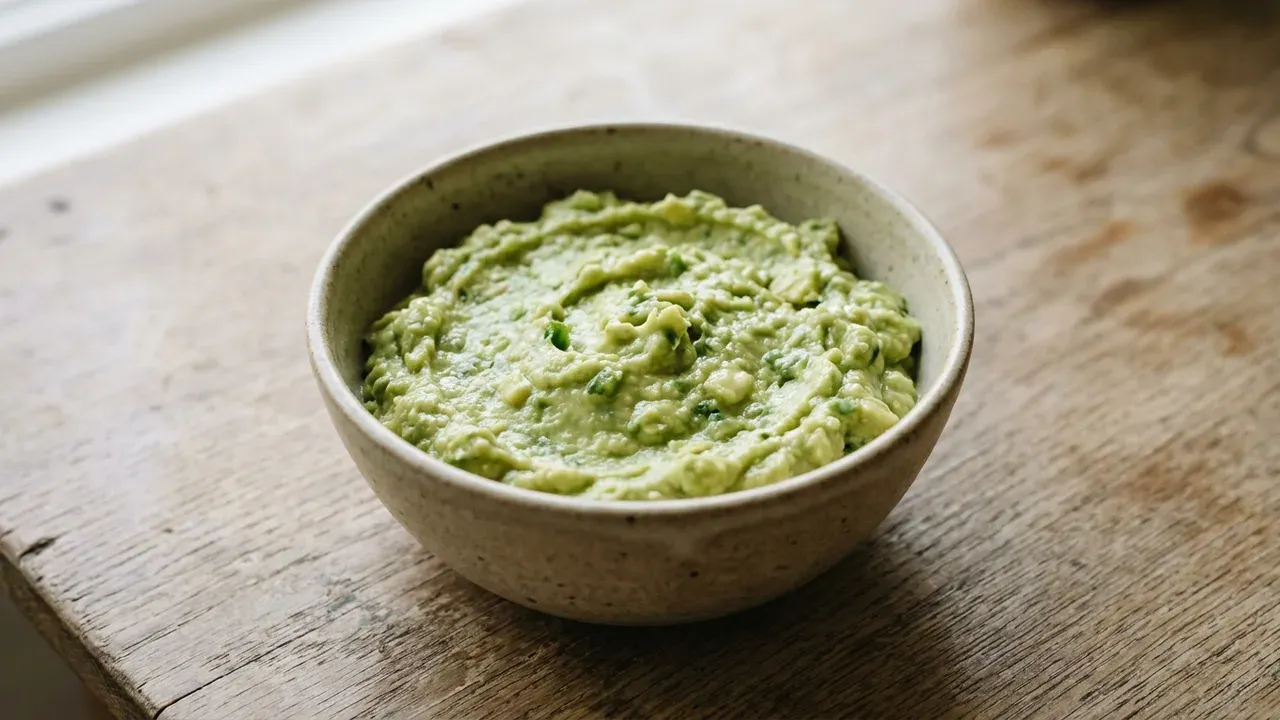
Recipe 26 'De aguacate' on printed page 137 of Volume 1 of 'El cocinero mexicano' (1831) explicitly directs: peel avocados and grind them with green chili, raw or roasted as desired; dilute with a little water; do not add salt until brought to the table so that it does not turn black; and set aside a little chopped onion for those who like it that way.
No citrus juice (lime/lemon), tomato, cilantro, oil, vinegar, or garlic appears in the original 1831 text.
Inference and interpretation
- In 1831 central Mexico, native thin-skinned varieties (such as Persea americana var. drymifolia lines) were likely common rather than the modern 20th-century Hass cultivar, though Recipe 26 itself specifies no particular variety.
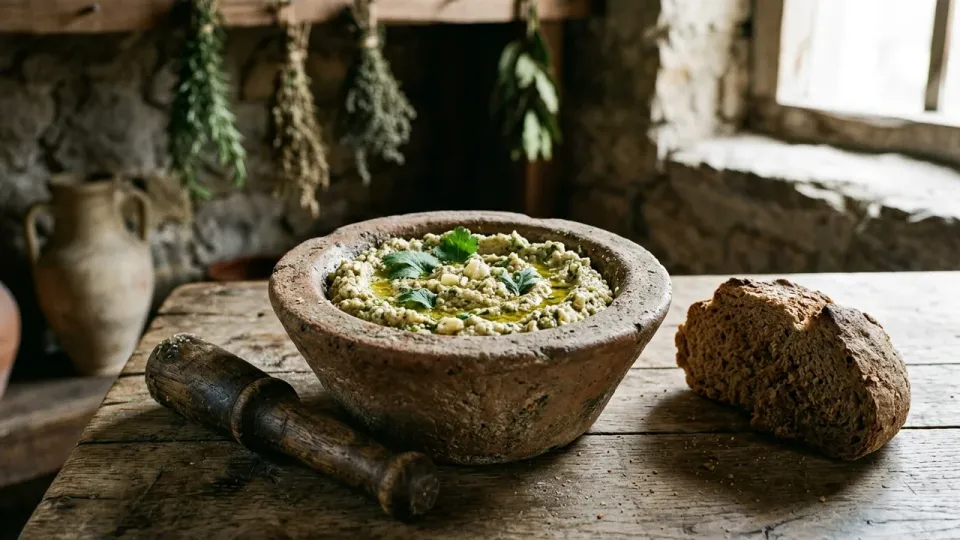
- While avocados were commonly ground in volcanic stone molcajetes or metates in period Mexican kitchens, the original text does not prescribe a specific utensil.
- The 1831 text directs holding back salt until table service specifically 'so that it does not turn black' (para que no se ponga negra). In modern food science, avocado browning is understood as an enzymatic reaction between polyphenol oxidase (PPO) and atmospheric oxygen, and the anti-browning efficacy of salt timing has not been empirically verified in this recipe, yet it reflects an intriguing period culinary belief.
- The 1831 date marks the publication of an early post-independence cookbook, representing an early printed record within the long history of Mexican avocado dishes (āhuacamolli); it should not be claimed as an invention date, an unbroken direct Aztec transmission, or the 'oldest guacamole'.
Modern adjustments
- Designed for home kitchens using 200 g ripe Hass avocado, 1–3 g fresh green chili, 10–20 mL water, and 1 g salt, served with 15 g optional chopped white onion (approx. 2–3 servings, untested proposal).
- Common additions in modern guacamole such as lime or lemon juice, tomatoes, cilantro, oil, and garlic are intentionally omitted because they are not documented in this 1831 Recipe 26.
- Onion is kept as an optional side dish per the original text, and salting occurs right before table presentation.
- Comprehensive food safety measures are established: thorough washing of produce skins under running water without soap (FDA produce guidelines), preventing cross-contamination, safe spoon-pitting to prevent avocado-hand injuries, chili handling precautions, and latex-fruit allergy awareness.
- Because this is an unheated raw dish, consume promptly and avoid prolonged room-temperature holding. Store any leftovers with wrap pressed to the surface at 4°C or below for same-day consumption (untested proposal with no shelf-life testing).
Sources and references
- El cocinero mexicano (De aguacate, p. 137)
- Author
- 無名(編・刊:Mariano Galván Rivera / 印刷:Mariano Arévalo)
- Publication or composition year
- 1831年
Open source: https://digital.utsa.edu/digital/collection/p15125coll10/id/17251Consulted Recipe 26 'De aguacate' on printed page 137 of Volume 1 of 'El cocinero mexicano' published in Mexico City in 1831 (University of Texas at San Antonio Libraries Special Collections, Diana Kennedy Collection, call number TX716 .M4 C615 1831). The high-resolution facsimile opening (Leaf ID 17251, image txsau_tx716-m4-c615-1831_081, recto p. 137) was directly examined in the UTSA Digital Collections. The text instructs peeling and grinding avocados with raw or roasted green chili, diluting with a little water, withholding salt until serving so it does not turn black, and preparing chopped onion for those who prefer it. The duplication observed in secondary blog posts does not exist in the 1831 original print edition.
- Selecting and Serving Produce Safely
- Author
- U.S. Food and Drug Administration (FDA)
- Publication or composition year
- 2024年
Open source: https://www.fda.gov/food/buy-store-serve-safe-food/selecting-and-serving-produce-safelyOfficial FDA consumer guidance on produce safety. Directs washing raw produce thoroughly under clean running water before cutting to prevent transferring bacteria from the skin to the edible interior, avoiding soaps or detergents on food, and preventing cross-contamination from raw meats and seafood.
- Latex Allergy
- Author
- American Academy of Allergy, Asthma & Immunology (AAAAI)
- Publication or composition year
- 2023年
Open source: https://www.aaaai.org/tools-for-the-public/conditions-library/allergies/latex-allergyClinical guidance from the AAAAI on latex allergy and latex-fruit syndrome, outlining cross-reactivity between natural rubber latex and plant proteins in fruits such as avocado, banana, chestnut, and kiwi.