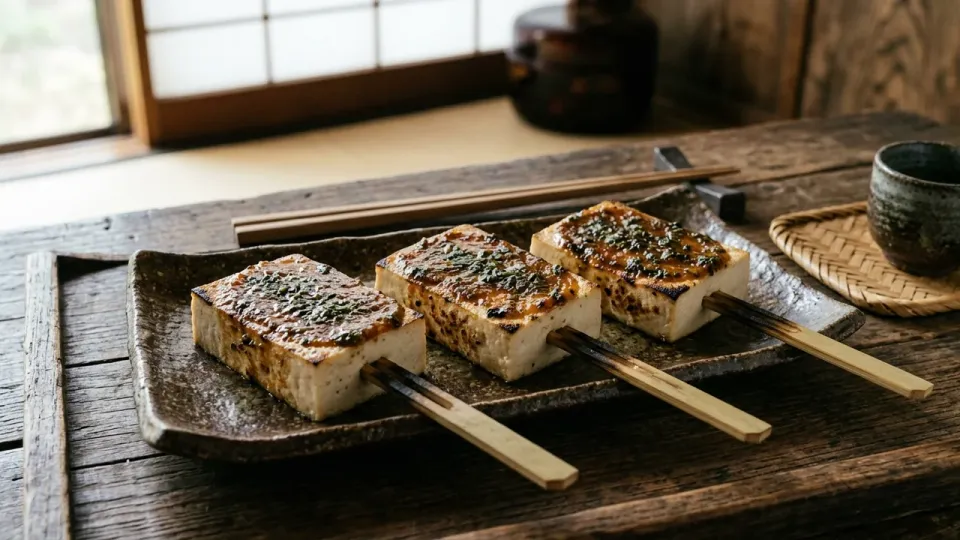
Edo Period, Japan · 1603–1868 CE
Kinome Dengaku (Miso-Grilled Tofu)
Kinome Dengaku appears in Tofu Hyakuchin, a Japanese cookbook published in 1782. Historical evidence is separated from modern changes.
Early Meiji beef-eating culture, with reference to an 1871 literary work
A beef hotpot proposal for 3 with thinly sliced beef, Japanese long onion and grilled tofu in a miso broth. Agura-nabe supplies the historical setting; the quantities and method are designed for a modern home. This untested proposal is not a formula prescribed by the original text.
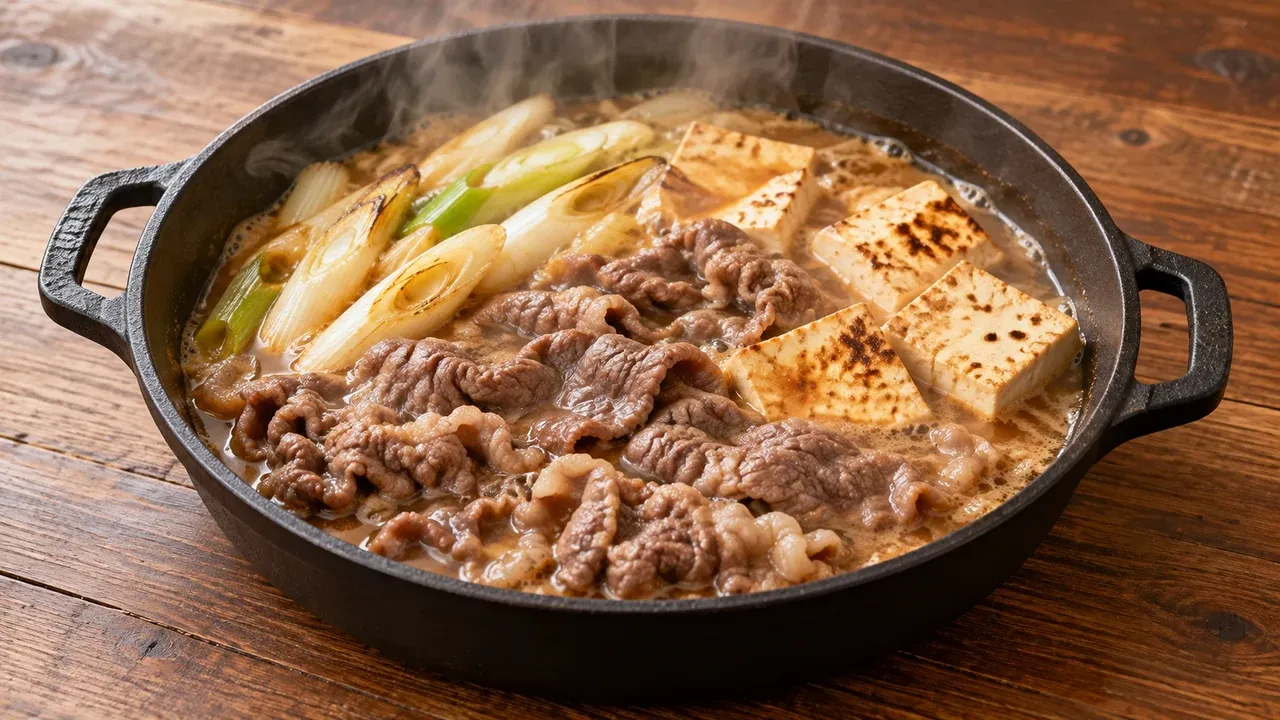
MODERN RECREATION
HISTORICAL RECORD
These sources provide historical context. They do not necessarily support the quantities or cooking times in the modern adaptation.
Registered as historically inspired. This does not establish that the dish or its methods reproduce historical practice.
The published electronic text of Agura-nabe depicts busy beef-hotpot restaurants and people associating meat eating with Meiji civilization and enlightenment.
A modern agriculture-ministry account describes gyu-nabe as beef simmered in a miso- or soy-sauce-based sauce.
The published electronic preface and opening passages were read; the original printed pages and complete work were not collated.
Only catalogue metadata was consulted; the original printed pages were not collated.
A modern institutional account was consulted; it is distinct from a historical recipe text.
Public home-food guidance was consulted; it does not validate this untested formulation or guarantee safety.
Public home-food guidance was consulted; it does not validate this untested formulation or guarantee safety.
© History Meshi / Codex (OpenAI built-in image generation, STEP 227)
Source: AI生成による現代再現イメージ。実調理写真・史料写真ではありません。 / AI-generated modern recreation; not a cooking-trial or historical-source photograph. / AI生成的现代再现示意图,并非实际试做或历史资料照片。 / AI生成的現代再現示意圖,並非實際試做或歷史資料照片。 / Recreación moderna generada por IA; no es una fotografía de una prueba de cocina ni de una fuente histórica.
License: 再利用の許諾条件は未設定。 / No separate reuse licence specified. / 未设定再利用许可。 / 未設定再利用授權。 / No se especifica licencia de reutilización.
Edo Period, Japan · 1603–1868 CE
Kinome Dengaku appears in Tofu Hyakuchin, a Japanese cookbook published in 1782. Historical evidence is separated from modern changes.
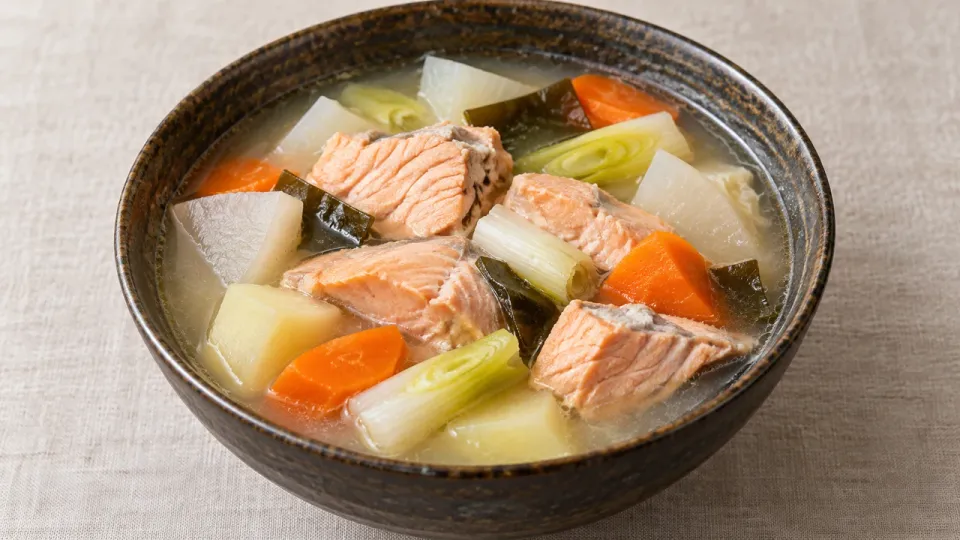
A living Ainu food tradition, informed by modern museum publications · Period unspecified
A substantial soup for 3, with salmon, root vegetables and kombu, seasoned with salt. This untested home proposal adapts a recipe shared by the museum in Shiraoi. It presents one example within the diverse Ainu tradition of ohaw.
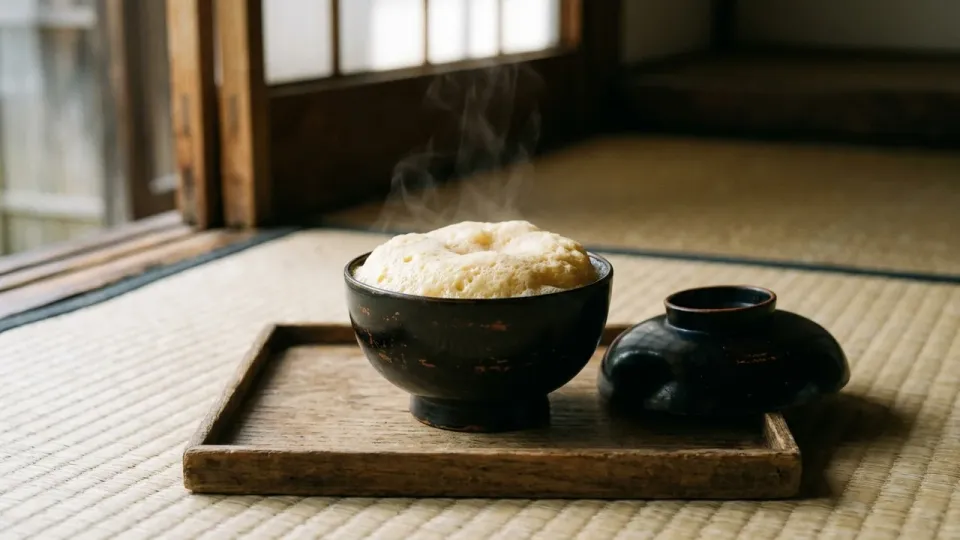
Edo Period, Japan · Edo Period
An account of Tamago Fuwafuwa in a 1915 transcription of Ryori Monogatari. Uncertain dashitamari and heating methods are separated from a steamed modern proposal that omits irizake.