HISTORICAL RECORD
Historical Sources and Evidence
These sources provide historical context. They do not necessarily support the quantities or cooking times in the modern adaptation.
Registered as a reconstruction based on sources. Distinguish the source's account from inference and modern adjustments.
Statements supported by sources
Inference and interpretation
- These are distinct formulas. Manuscript volume numbers and purported quotations have not been checked against originals and are not adopted. Historical use of buckwheat does not mean this adaptation contains it.
- STEP205 estimates about 620kcal for the batch, or approximately 52–62kcal when divided into 10–12. This is not a measurement and varies by product; it establishes neither prolonged endurance nor medical benefits.
Modern adjustments
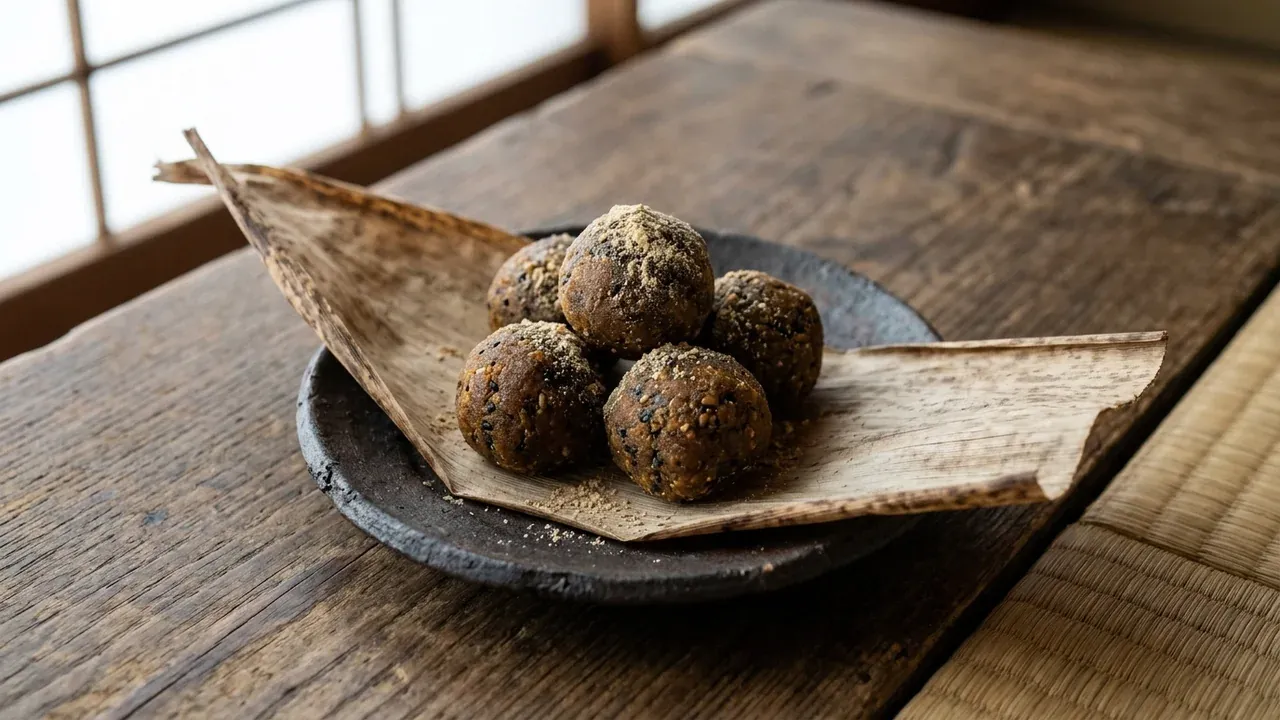
- The soy/rice/sesame/honey mixture is a modern proposal, not a proportional reduction of an original recipe. Do not add medicinal plants or resin. Use water, without an alcohol alternative.
- Use the proposed 3cm balls and 15–20-minute steaming method. The untested low-temperature oven-drying alternative and 5–7-day refrigeration claim are not adopted.
- Contains soy and sesame. No buckwheat or wheat is added, but check processed-product and cross-contact labels. Substitution does not remove all allergy risks. Honey makes it unsuitable for children under 12 months.
- Untested and not tasted. The proposed yield is 10–12; timings, texture and storage life are unverified.
Sources and references
- 久松眞:科学から読み解く忍者食(農畜産業振興機構、2016年9月、表1)
- Author
- 久松眞 / Makoto Hisamatsu
- Publication or composition year
- 2016
Open source: https://www.alic.go.jp/joho-s/joho07_001348.htmlSecondary study: article and Table 1 image checked; original manuscripts not checked. Buckwheat and wheat appear under kikatsugan, not its separate hyorogan column.
- FDA: Safe Food HandlingOpen source: https://www.fda.gov/food/buy-store-serve-safe-food/safe-food-handling
General modern cooling, refrigeration around 4°C or below and freezing around -18°C or below; not a storage trial of this dish.
- CDC: Raw Flour and DoughOpen source: https://www.cdc.gov/food-safety/foods/no-raw-dough.html
General advice against eating raw flour or dough and for thorough cooking; it does not prescribe 95°C for this bread.
- CDC: Botulism Prevention — infant botulismOpen source: https://www.cdc.gov/botulism/prevention/index.html
Do not give honey to children under 12 months; steaming does not make this recipe suitable for infants.