HISTORICAL RECORD
Historical Sources and Evidence
These sources provide historical context. They do not necessarily support the quantities or cooking times in the modern adaptation.
Registered as historically inspired. This does not establish that the dish or its methods reproduce historical practice.
Statements supported by sources
Inference and interpretation
- The account does not establish an invention year; ingredients and methods vary by household and area.
Modern adjustments
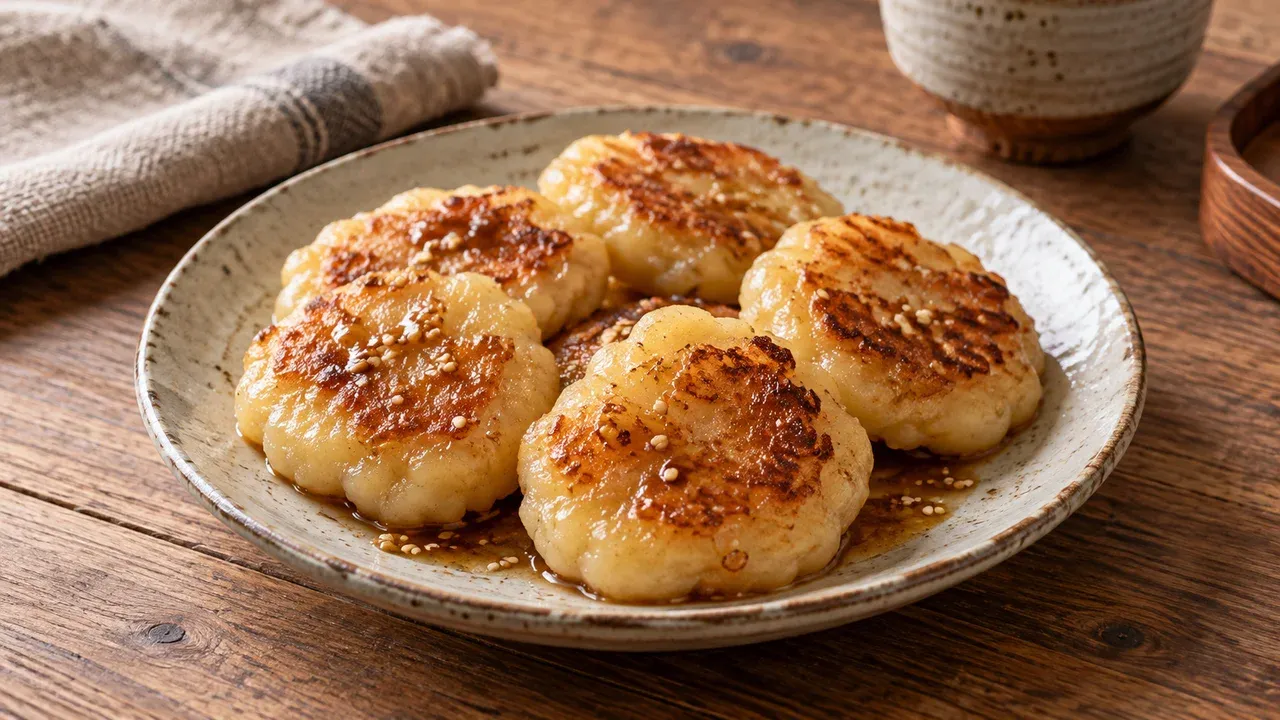
- This version uses 300g potato and 30g starch and omits perilla seed from a white-sesame sauce. Amounts, shape and frying time are household choices.
- Quantities and times are household design choices; this site has not cooked or shelf-life tested the recipe.
Sources and references
- 農林水産省「うちの郷土料理」いももち/いもだんご 北海道
- Publication or composition year
- Contemporary public record of Hokkaido tradition; origin year unspecified
Open source: https://www.maff.go.jp/j/keikaku/syokubunka/k_ryouri/search_menu/menu/imomochi_hokkaido.htmlThe relevant electronic entry was read; original manuscripts and printed images were not comprehensively collated.
- 厚生労働省:家庭でできる食中毒予防の6つのポイントOpen source: https://www.mhlw.go.jp/www1/houdou/0903/h0331-1.html
General guidance on 75°C for 1 minute, portioned cooling and refrigeration. The 4°C limit is our household handling choice, not a quotation of the source’s 10°C guidance.
- 農林水産省:じゃがいもによる食中毒を予防するためにOpen source: https://www.maff.go.jp/j/syouan/seisaku/foodpoisoning/naturaltoxin/potato.html
Read guidance on natural toxins in sprouts, their bases and green areas; heating alone is insufficient.