Ancient Rome · Ancient Rome
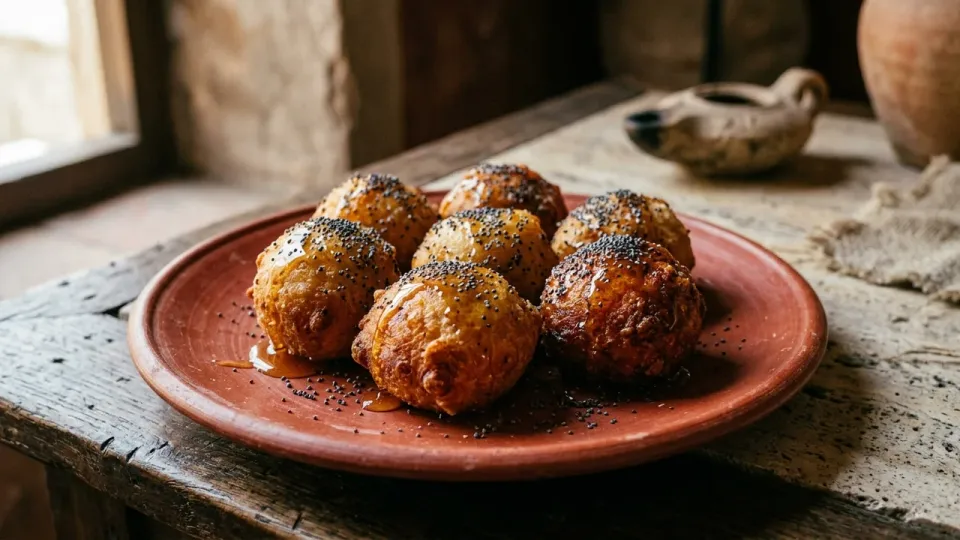
Globi
Cato's On Agriculture, section 79, describes cheese and grain cooked in fat, finished with honey and poppy seeds. Semolina, ricotta and vegetable oil are modern substitutions.
Inspired by a late antique recipe collection
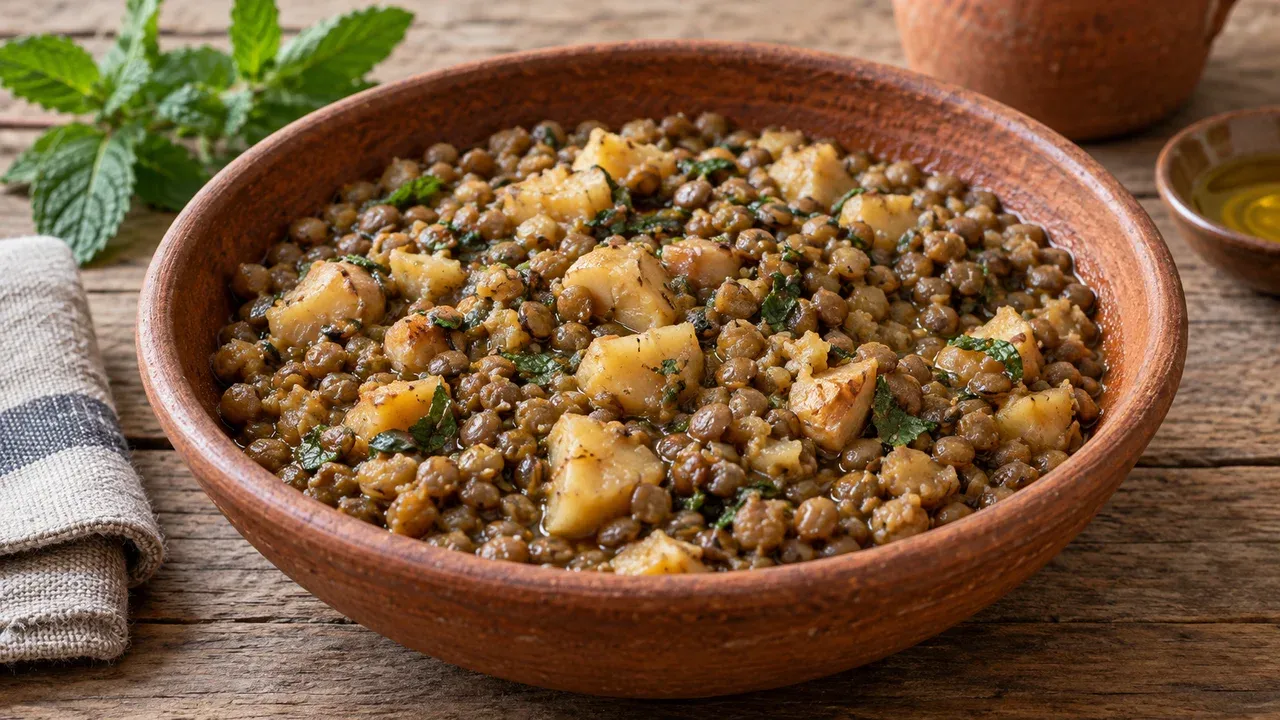
Tender lentils and soft chestnuts meet vinegar, honey and cumin. This household stew interprets the Apician chestnut recipe and its title, cooking the lentils separately before combining them.
MODERN RECREATION
Serves 2; about 45 minutes. Contains chestnuts. Honey is unsuitable for children under 1 year.
HISTORICAL RECORD
These sources provide historical context. They do not necessarily support the quantities or cooking times in the modern adaptation.
Registered as historically inspired. This does not establish that the dish or its methods reproduce historical practice.
The V.2.2 heading links lentils and chestnuts; its body describes boiling chestnuts and seasoning them with spices, vinegar, honey, fish sauce and oil.
The relevant electronic entry was read; original manuscripts and printed images were not comprehensively collated.
General guidance on 75°C for 1 minute, portioned cooling and refrigeration. The 4°C limit is our household handling choice, not a quotation of the source’s 10°C guidance.
Read the warning against honey for children under 1 year and the risks of improperly preserved food.
© History Meshi / OpenAI image_gen
License: AI-generated modern recreation / AI生成の現代再現イメージ / AI生成的现代复原示意 / AI生成的現代復原示意 / Recreación moderna generada por IA
Ancient Rome · Ancient Rome
Cato's On Agriculture, section 79, describes cheese and grain cooked in fat, finished with honey and poppy seeds. Semolina, ricotta and vegetable oil are modern substitutions.
Inspired by a late antique recipe collection · Ancient Rome
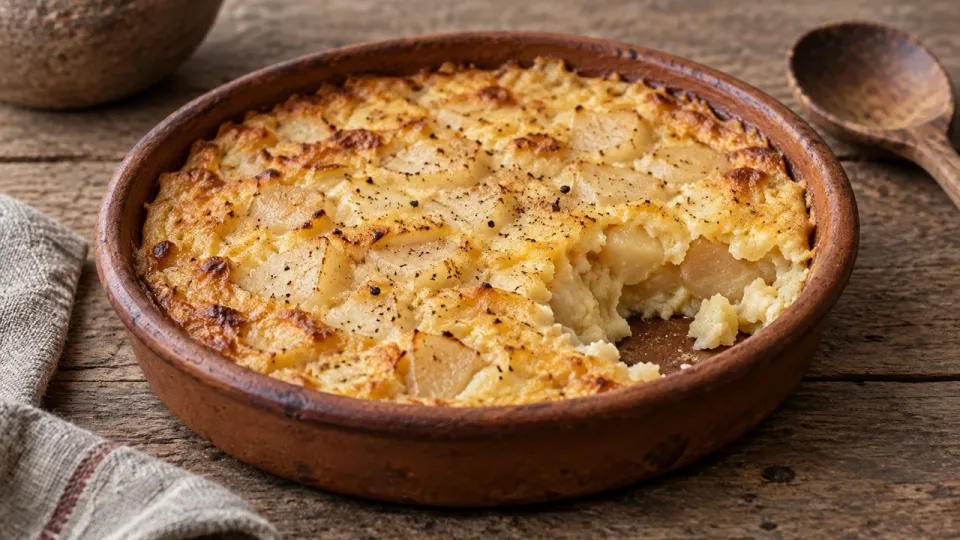
Soft pears and eggs bake into a tender dish scented with cumin and pepper. Honey and a little fish sauce bring together sweet and savoury flavours in a home-oven version of a Roman patina.
A Roman account from the 2nd century BCE · Ancient Rome
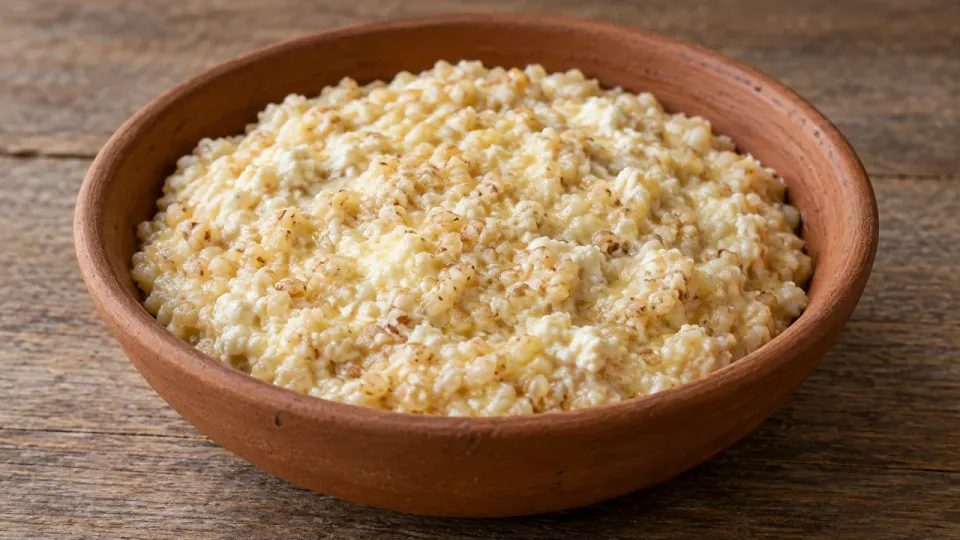
Tender wheat grains, ricotta and honey make a gently sweet porridge. Cato’s On Agriculture, section 85, provides the starting point for this modern home version made with simmered bulgur.