Ancient Rome · Ancient Rome
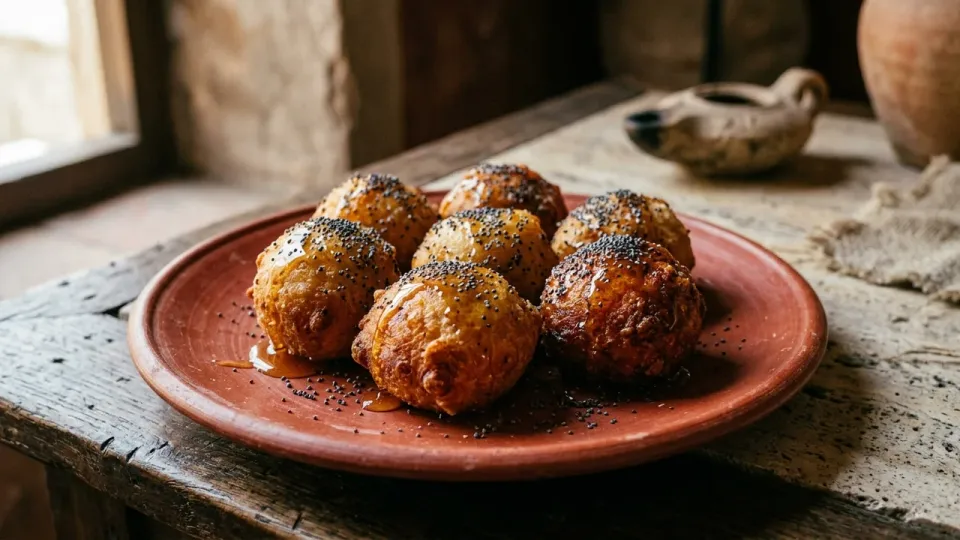
Globi
Cato's On Agriculture, section 79, describes cheese and grain cooked in fat, finished with honey and poppy seeds. Semolina, ricotta and vegetable oil are modern substitutions.
A Roman account from the 2nd century BCE
Tender wheat grains, ricotta and honey make a gently sweet porridge. Cato’s On Agriculture, section 85, provides the starting point for this modern home version made with simmered bulgur.
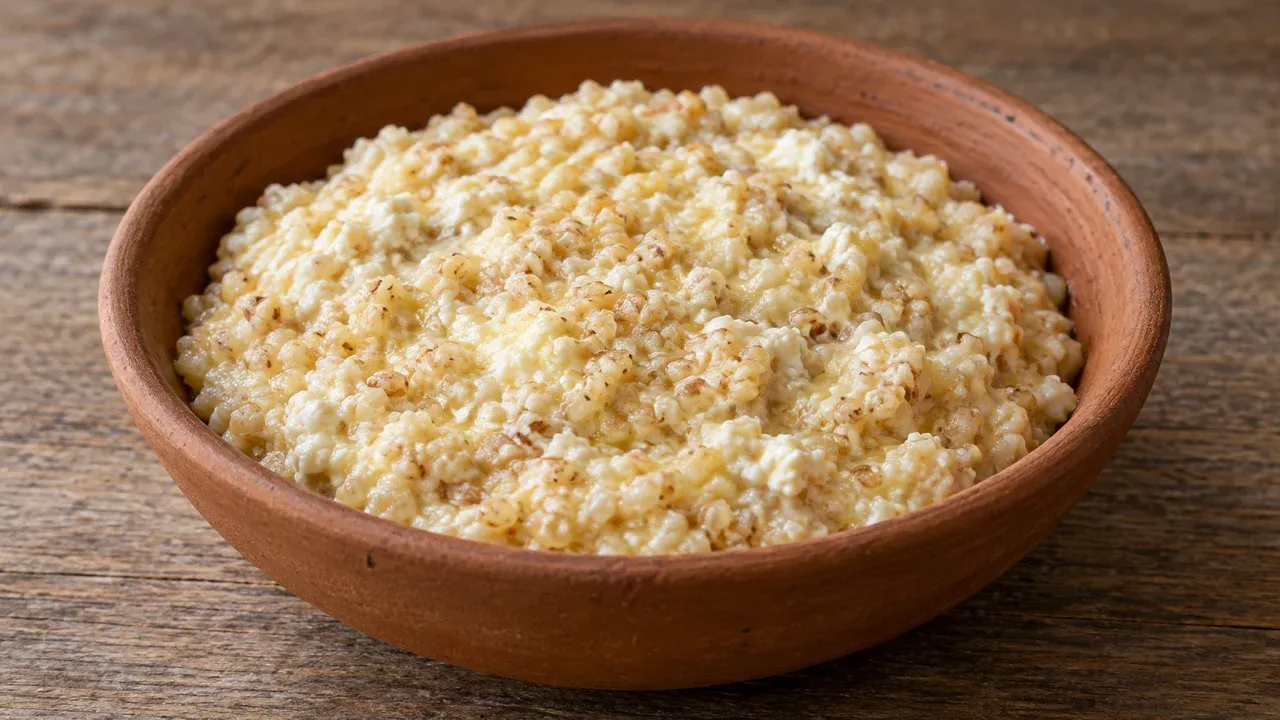
MODERN RECREATION
Makes 2 portions; allow about 30 minutes.
Contains honey: do not give to infants under 1 year, even after cooking. Do not taste after adding raw egg until fully cooked.
HISTORICAL RECORD
These sources provide historical context. They do not necessarily support the quantities or cooking times in the modern adaptation.
Registered as a reconstruction based on sources. Distinguish the source's account from inference and modern adjustments.
The English translation of Cato’s On Agriculture 85.1 describes soaking 1 pound of groats until soft, mixing with 3 pounds of fresh cheese, half a pound of honey and 1 egg, then putting it into a new pot.
Read the university-hosted English translation of 85.1; Latin manuscripts and page images were not examined.
General guidance on heating center to at least 75°C for 1 min, hand/utensil hygiene, and prompt cooling; not a trial validation of this recipe.
Consulted warning against giving honey to infants under 1 year due to infant botulism risk; not a safety trial of this dish.
© History Meshi / OpenAI image_gen
License: AI-generated modern recreation / AI生成の現代再現イメージ / AI生成的现代复原示意 / AI生成的現代復原示意 / Recreación moderna generada por IA
Ancient Rome · Ancient Rome
Cato's On Agriculture, section 79, describes cheese and grain cooked in fat, finished with honey and poppy seeds. Semolina, ricotta and vegetable oil are modern substitutions.
Ancient Rome (c. 160 BCE treatise) · Ancient Rome
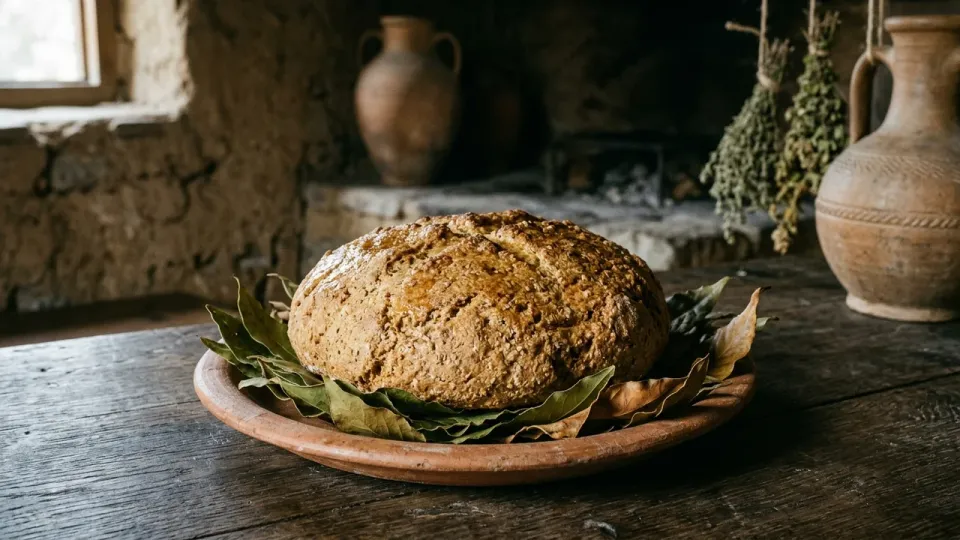
A home adaptation of the cheese, flour and egg bread in Cato's De agri cultura 75. Bay leaves and a modern oven are used here; the leaf species and baking temperature are not specified in that passage.
Ancient Rome · Ancient Rome
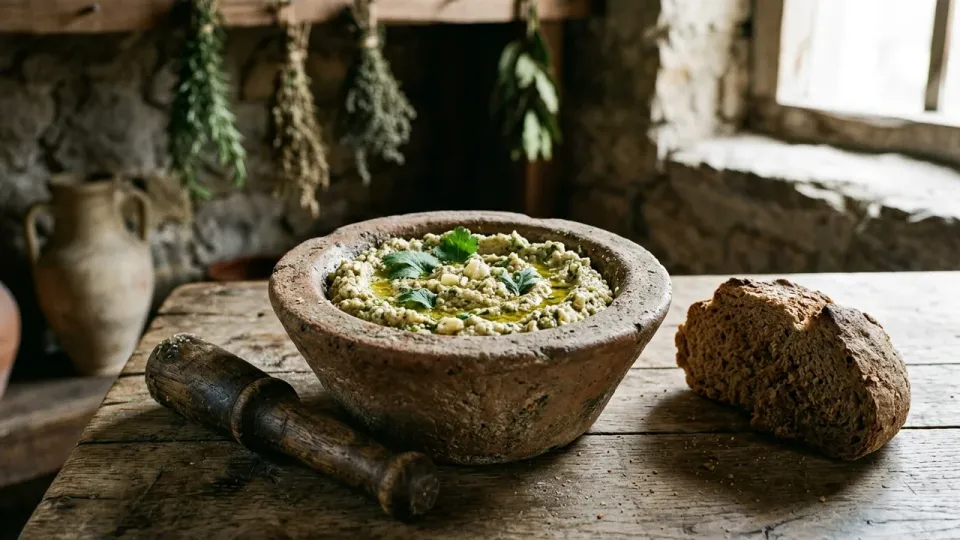
A modern adaptation for pounding cheese, garlic and herbs, guided by the Latin poem Moretum and its farmer’s food preparation. Neither Virgil’s authorship nor an exact composition date is established here.