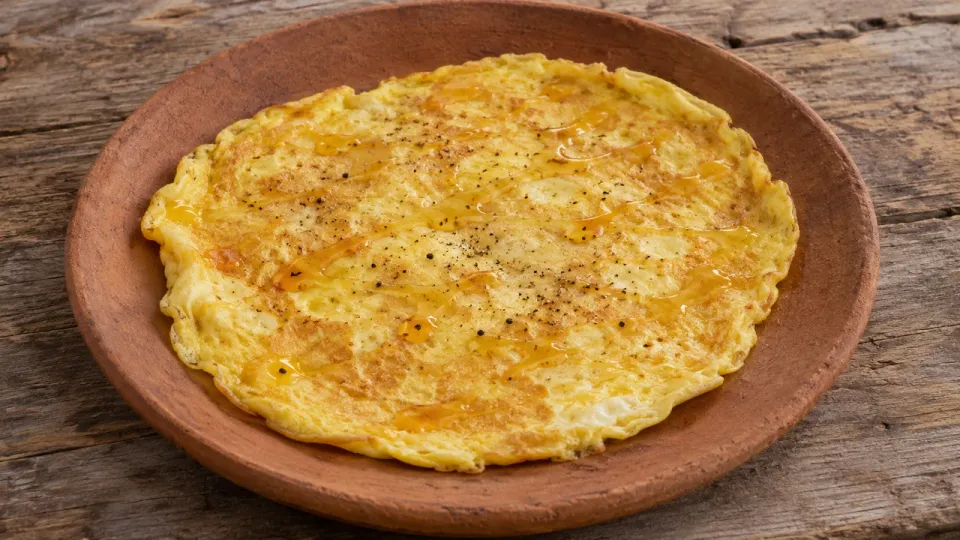
From the late-antique Apicius collection · Ancient Rome
Ova spongia: Roman-style milk omelette
A tender egg-and-milk omelette finished with honey and black pepper, without separately whipped whites.
Inspired by a late antique recipe collection
Soft pears and eggs bake into a tender dish scented with cumin and pepper. Honey and a little fish sauce bring together sweet and savoury flavours in a home-oven version of a Roman patina.
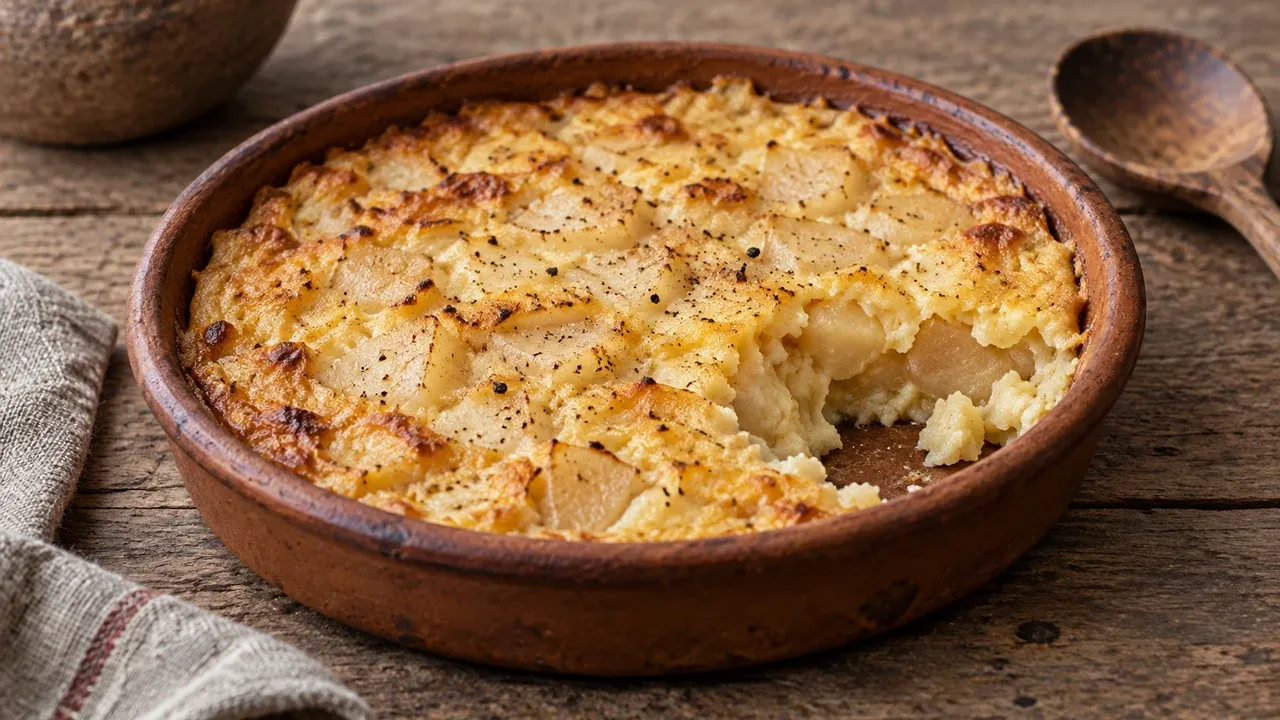
MODERN RECREATION
Serves 2; about 50 minutes. Contains honey: do not give to children under 1 year.
HISTORICAL RECORD
These sources provide historical context. They do not necessarily support the quantities or cooking times in the modern adaptation.
Registered as a reconstruction based on sources. Distinguish the source's account from inference and modern adjustments.
The Latin IV.2.35 combines cooked pears with pepper, cumin, honey, passum, liquamen and a little oil, then adds eggs to make a patina.
The relevant electronic recipe was read; original manuscripts and printed images were not collated. See STEP265 for edition, numbering and modern adjustments.
The relevant electronic recipe was read; original manuscripts and printed images were not collated. See STEP265 for edition, numbering and modern adjustments.
Read the warning against honey for children under 1 year and the risks of improperly preserved food.
General guidance on 75°C for 1 minute, portioned cooling and refrigeration. The 4°C limit is our household handling choice, not a quotation of the source’s 10°C guidance.
© History Meshi / OpenAI image_gen
License: AI-generated modern recreation / AI生成の現代再現イメージ / AI生成的现代复原示意 / AI生成的現代復原示意 / Recreación moderna generada por IA
From the late-antique Apicius collection · Ancient Rome
A tender egg-and-milk omelette finished with honey and black pepper, without separately whipped whites.
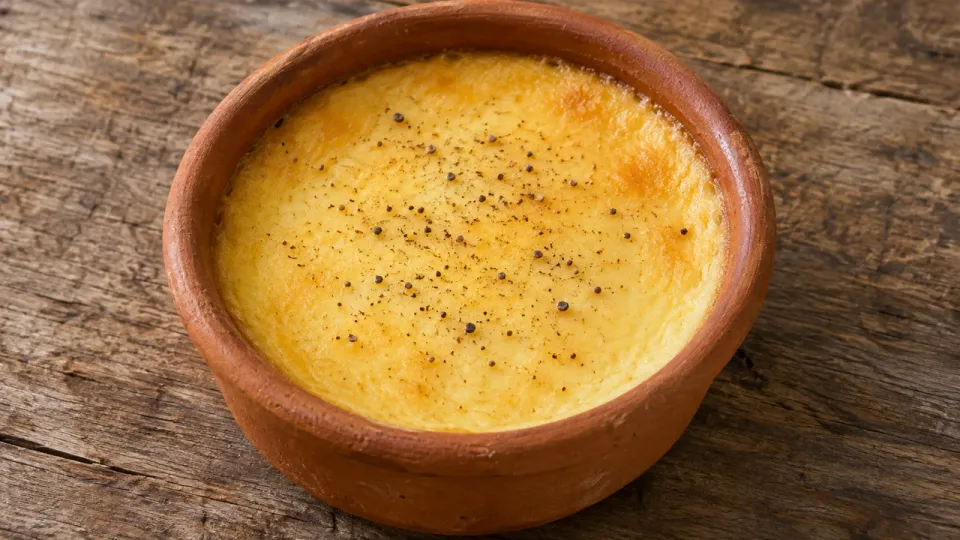
Roman Apicius collection, PHI 7.11.7 · Ancient Rome
Milk, eggs and honey bake gently into a tender custard, finished with a little black pepper.
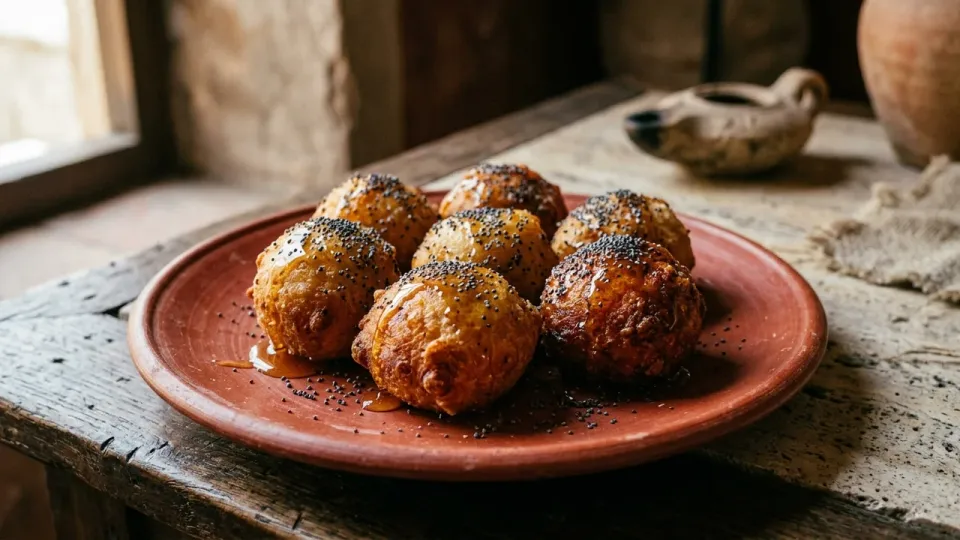
Ancient Rome · Ancient Rome
Cato's On Agriculture, section 79, describes cheese and grain cooked in fat, finished with honey and poppy seeds. Semolina, ricotta and vegetable oil are modern substitutions.