HISTORICAL RECORD
Historical Sources and Evidence
These sources provide historical context. They do not necessarily support the quantities or cooking times in the modern adaptation.
Statements supported by sources
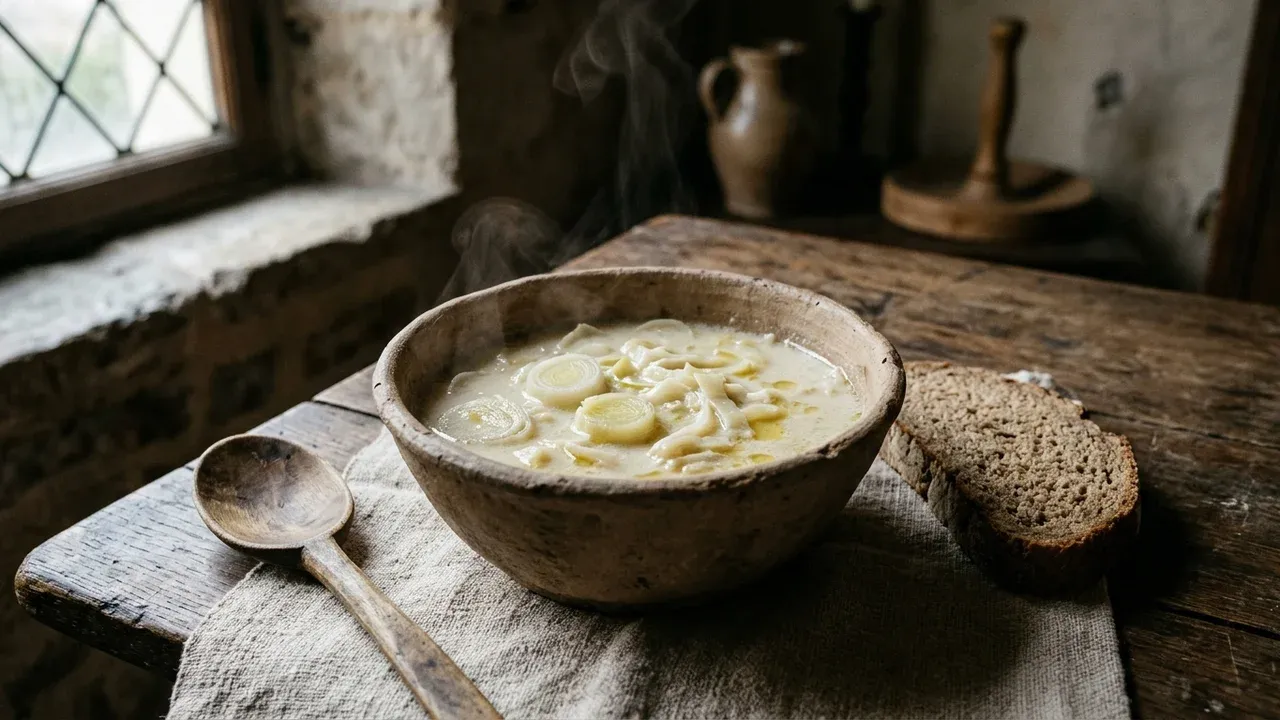
The c. 1393 French guide Le Ménagier de Paris (Book II, Section 5) details "Porée blanche": parboiling white leeks, frying minced onions in fat/oil, sweating the leeks with them, and simmering in almond milk (or cow's milk) served over toasted bread.
Inference and interpretation
- The term 'porée' historically referred to leek-based potages; the 'blanche' variety used exclusively the white stalks and white almond milk for an esteemed delicate appearance.
- Almond milk was the indispensable medieval substitute for cow's milk during religious fasting periods like Lent.
Modern adjustments
- Faithful to the historical Lenten version, white leeks and fried minced onions are simmered in delicate almond milk. Saffron is excluded as it would turn this porée blanche yellow.
- Ginger and white pepper are modern complementary spices reflecting late medieval French palate, clearly distinguished from the primary source base ingredients.
- Vegetable oil can replace butter for an authentic dairy-free medieval fasting preparation.
Sources and references
- Le Ménagier de Paris
- Author
- Anonyme
- Publication or composition year
- c. 1393
Open source: https://archive.org/details/le-menagier-de-paris-tome-02-bsbBook II, Section 5 "Porée blanche" (under Potages communs). Describes parboiling white parts of leeks (blanc des poreaux), frying minced onions (oignons mincés) in oil/lard, frying the leeks together, and simmering in sweet almond milk (or cow milk) on fast/fish days, or in pork broth and lard on meat days.