Ancient Rome · Ancient Rome
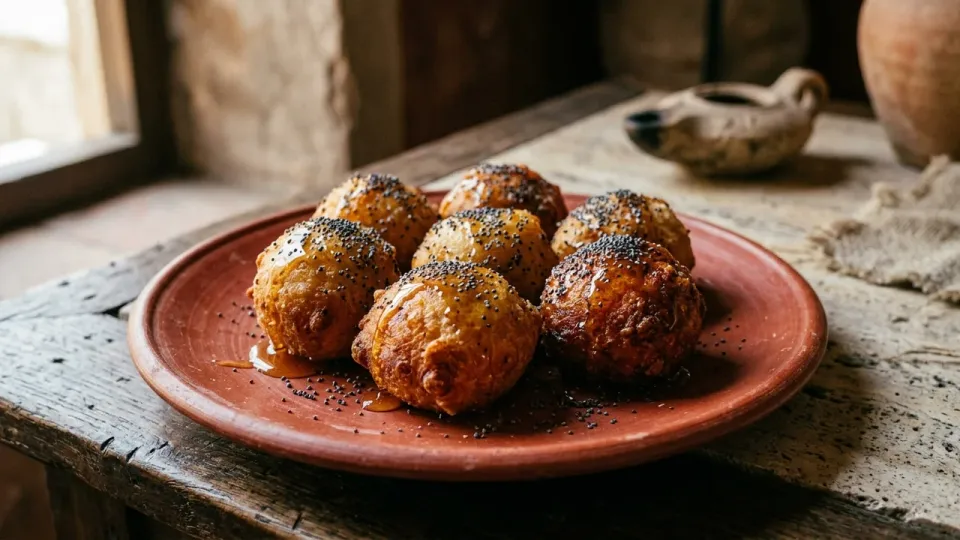
Globi
Cato's On Agriculture, section 79, describes cheese and grain cooked in fat, finished with honey and poppy seeds. Semolina, ricotta and vegetable oil are modern substitutions.
c. 160 BC Ancient Rome
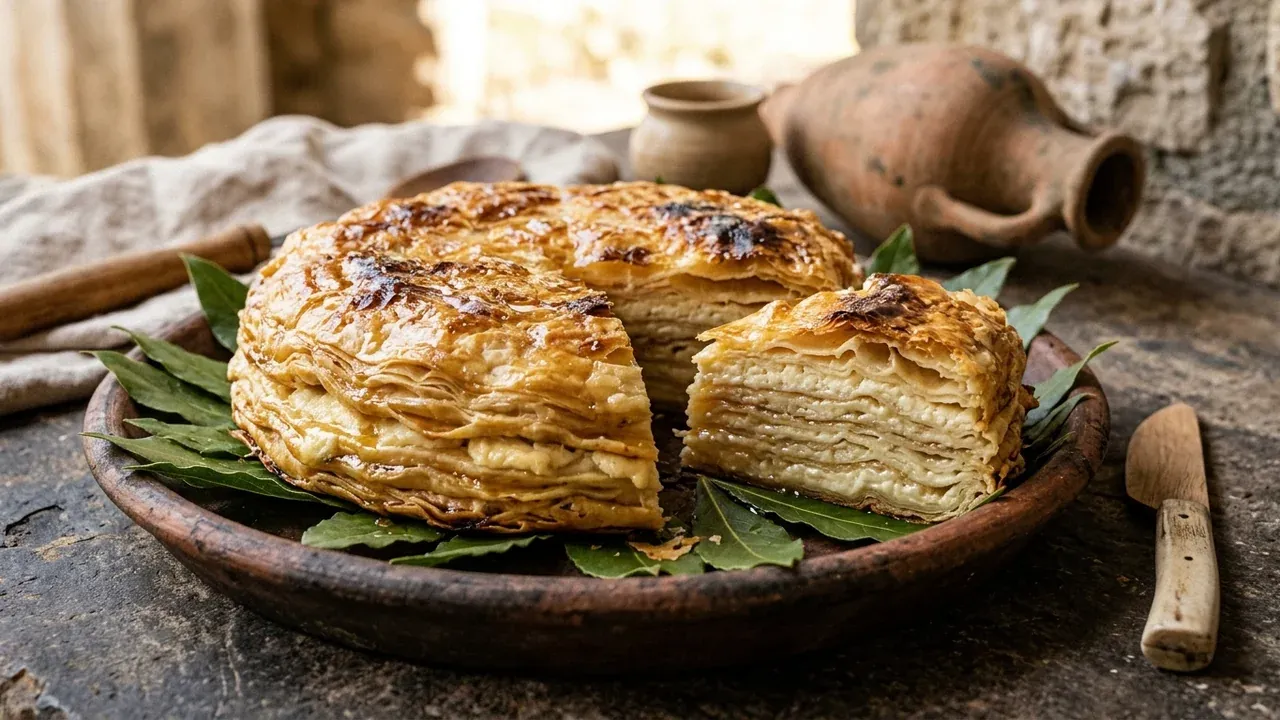
Described in Cato the Elder's De Agri Cultura Chapter 76, this ancient Roman layered pastry stacks delicate dough sheets, fresh cheese, and honey over fragrant bay leaves.
MODERN RECREATION
【Infant Botulism Warning】This recipe contains honey. NEVER feed to infants under 1 year of age due to the risk of infant botulism, even after thorough baking.
The bay leaves are for aroma only during baking; remove them before eating.
HISTORICAL RECORD
These sources provide historical context. They do not necessarily support the quantities or cooking times in the modern adaptation.
Cato's De Agri Cultura, Chapter 76, mixes desalted, sieved fresh sheep cheese with honey, alternates this mixture with tracta sheets on a thin base (solum tenue), encloses it, bakes it over bay leaves under a testum with coals, and brushes it with honey after baking.
Cato's De Agri Cultura, Chapter 76, describes placenta. Soak fresh sheep cheese in water to reduce salt, sieve it, and mix it with honey. Alternate tracta sheets with this cheese-honey mixture on a thin base (solum tenue), enclose it, and bake over bay leaves under a testum with coals. Brush with honey after baking. The linked source is a public English translation, compared with the electronic Latin text; a complete collation of printed editions has not been performed.
© History Meshi / AI-generated recreation
License: AI-generated modern recreation / AI生成の現代再現イメージ / AI生成的现代复原示意 / AI生成的現代復原示意 / Recreación moderna generada por IA
Ancient Rome · Ancient Rome
Cato's On Agriculture, section 79, describes cheese and grain cooked in fat, finished with honey and poppy seeds. Semolina, ricotta and vegetable oil are modern substitutions.
Ancient Rome (c. 160 BCE treatise) · Ancient Rome
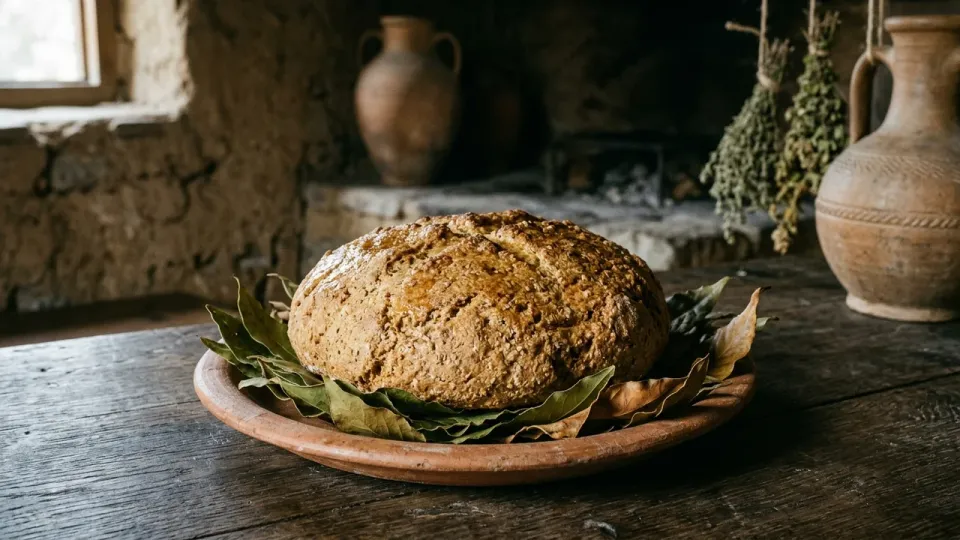
A home adaptation of the cheese, flour and egg bread in Cato's De agri cultura 75. Bay leaves and a modern oven are used here; the leaf species and baking temperature are not specified in that passage.
Ancient Rome (1st–4th c. AD) · 1st–4th c. Rome
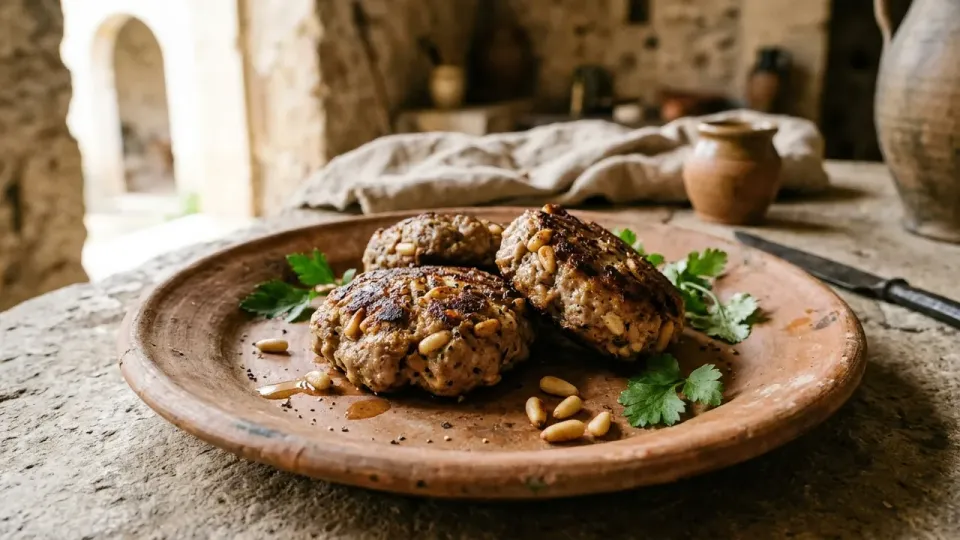
Ancient Roman minced pork patties blended with wine-soaked bread, pine nuts, garum, and black pepper. One of the earliest documented ancestors of modern meatballs and burgers.