HISTORICAL RECORD
Historical Sources and Evidence
These sources provide historical context. They do not necessarily support the quantities or cooking times in the modern adaptation.
Statements supported by sources
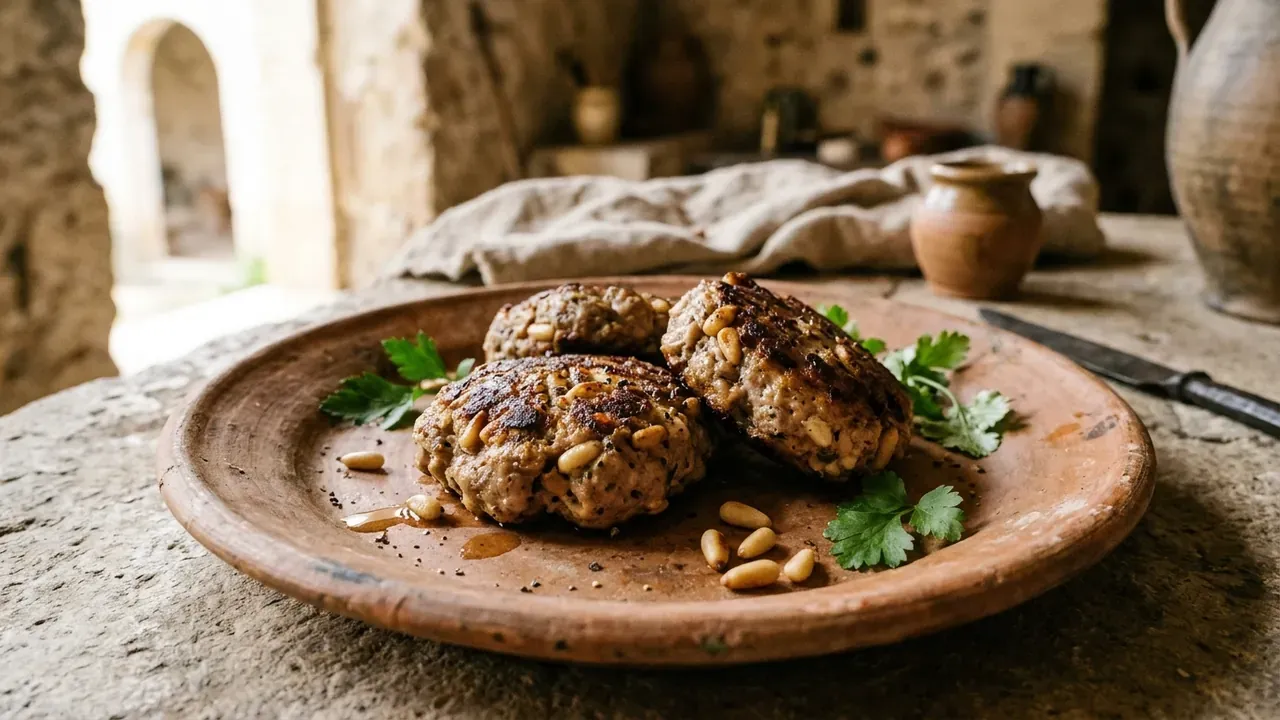
Apicius Book II, 1.7 (No. 47) describes "Isicia omentata", combining wine-soaked bread crumbs with minced meat, seasoned with pepper and liquamen (garum), formed around pine nuts and peppercorns, wrapped in caul fat, and roasted with caroenum.
Inference and interpretation
- While Apicius does not specify the meat cut, pork or beef was standard in Roman minced dishes.
- Caul fat was traditionally used to baste the lean meat during roasting, keeping the patties moist.
Modern adjustments
- Natural fish sauce (such as colatura or additive-free fish sauce) substitutes for ancient garum, and pan-frying in olive oil replaces caul fat and reduced grape must (caroenum) for kitchen convenience.
- Ground cumin is included as a modern complementary seasoning reflecting broader Roman spice traditions, distinguished from the exact primary source ingredients.
- Ground pork must reach an internal core temperature of at least 75°C (165°F) for at least 1 minute to ensure food safety against pathogens.
Sources and references
- De Re Coquinaria
- Author
- Apicius
- Publication or composition year
- c. 1st–4th Century AD
Open source: https://www.gutenberg.org/ebooks/29728Book II (Sarcoptes), 1.7 (No. 47) "Isicia omentata". Describes pounding minced meat with wine-soaked white bread crumb, seasoning with pepper and liquamen (garum), forming patties around pine nuts and peppercorns, wrapping in caul fat (omentum), and gently roasting with caroenum.