HISTORICAL RECORD
Historical Sources and Evidence
These sources provide historical context. They do not necessarily support the quantities or cooking times in the modern adaptation.
Statements supported by sources
Inference and interpretation
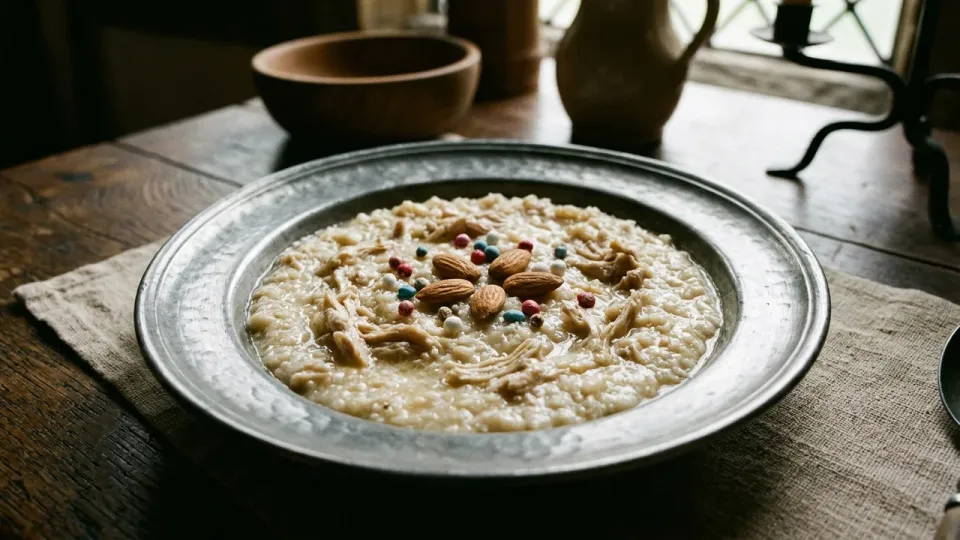
- During medieval fasting and feast periods, almond milk served as an elite, luxurious substitute for dairy milk to create smooth sweet 'mus' (purees).
Modern adjustments
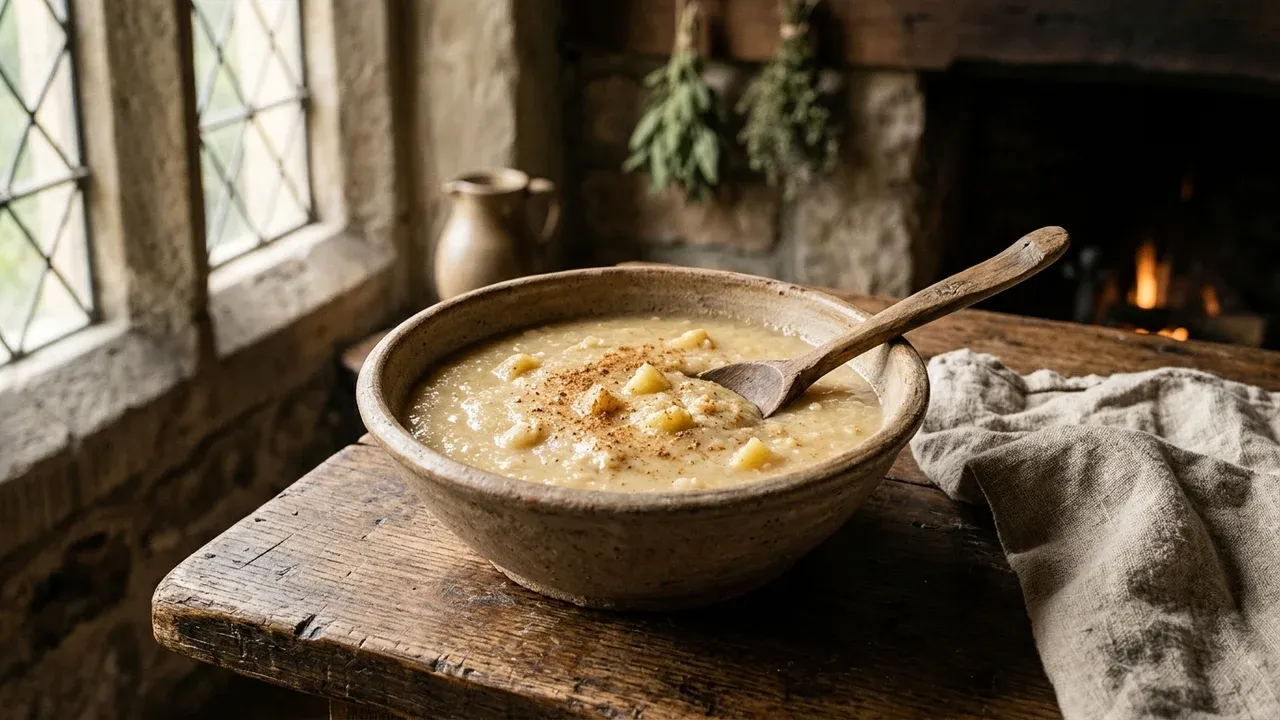
- Unsweetened commercial almond milk and white bread are adapted for home kitchens, using butter instead of lard and adding a pinch of cinnamon and sugar/honey with strict infant honey warnings.
- Quantities and times are household design choices; this site has not cooked or shelf-life tested the recipe.
Sources and references
- Das Buoch von guoter Spise (c. 1350), Rezept 70 (Ein mandelmus), Würzburg manuscript (1844 published transcription; electronic text on Wikisource)
- Publication or composition year
- Middle High German manuscript, c. 1350
Open source: https://de.wikisource.org/wiki/Das_Buoch_von_guoter_SpiseThe electronic text of recipe 70 ('Ein mandelmus') was verified; it directs simmering cubed bread in almond milk until thick and topping with fried diced apples.
- 厚生労働省:ハチミツを与えるのは1歳を過ぎてからOpen source: https://www.mhlw.go.jp/stf/seisakunitsuite/bunya/kenkou_iryou/shokuhin/syokuchu/01_00004.html
Official guidance warning against giving honey to infants under 1 year of age due to infant botulism risks; normal cooking heat does not destroy botulinum spores.
- 厚生労働省:家庭でできる食中毒予防の6つのポイントOpen source: https://www.mhlw.go.jp/www1/houdou/0903/h0331-1.html
General guidance on 75°C for 1 minute, portioned cooling and refrigeration. The 4°C limit is our household handling choice, not a quotation of the source’s 10°C guidance.