HISTORICAL RECORD
Historical Sources and Evidence
These sources provide historical context. They do not necessarily support the quantities or cooking times in the modern adaptation.
Statements supported by sources
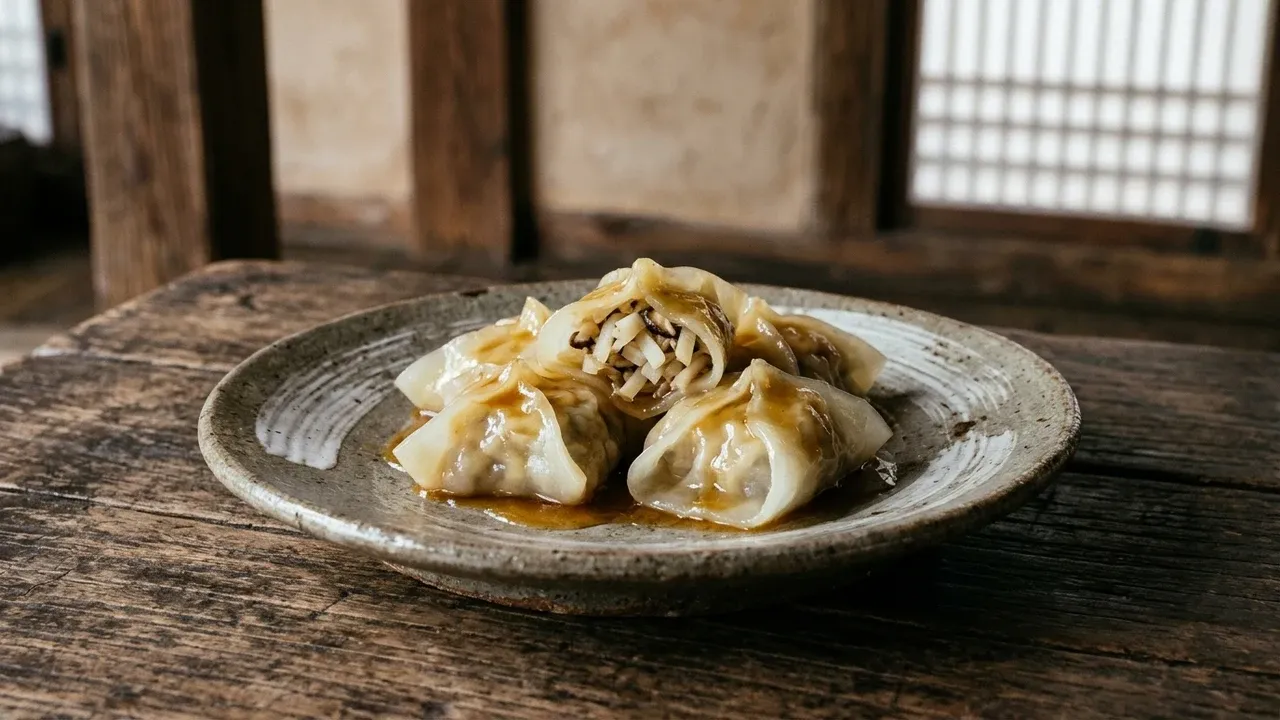
Eumsikdimibang (c. 1670) instructs to salt thinly sliced winter melon until pliable, wrap it around boiled radish matchsticks and minced mushrooms (rock tripe 'syeongi', shiitake 'pyogo', and wild mushroom 'jini') seasoned with pepper, skewer and steam in a double boiler, remove skewers, and dress with a seasoned gravy of soy sauce, oil, flour, and raw pheasant broth seasoned with black and Sichuan pepper.
Inference and interpretation
- 'Nureumi' is an archaic Korean culinary term for dishes finished with a savory thickened gravy. In Eumsikdimibang, this dish highlights a harmonious balance of tender vegetables, mushrooms, and savory wild game broth. Historical 'syeongi' corresponds to rock tripe (seogi), while specific modern identification of 'jini' remains open.
Modern adjustments
- Historical raw pheasant broth is substituted with widely accessible chicken broth for modern home kitchens.
- Rare historical rock tripe and wild mushrooms are substituted with readily available dried shiitake and king oyster mushrooms.
- Wheat flour is the historical thickening agent, but potato starch is equally suitable for modern convenience.
- Finishing with toasted sesame oil is an optional modern culinary addition.
Sources and references
- Eumsikdimibang (飲食知味方)
- Author
- Lady Chang (張桂香 / 1598–1680)
- Publication or composition year
- c. 1670
Open source: https://ko.wikisource.org/wiki/음식디미방From Eumsikdimibang (c. 1670), a Korean cookbook written in hangul by Lady Chang. 'Donga Nureumi' (동화느ᄅᆞ마) features thinly sliced winter melon wrapped around boiled radish and minced mushrooms (rock tripe, shiitake, and jini), steamed, and dressed with a savory gravy of soy sauce, oil, wheat flour, and raw pheasant broth seasoned with pepper and sansho.