← Back to Home

EXPLORE HISTORY

Explore Historical Recipes

Discover food by region and historical period.

Results14recipes
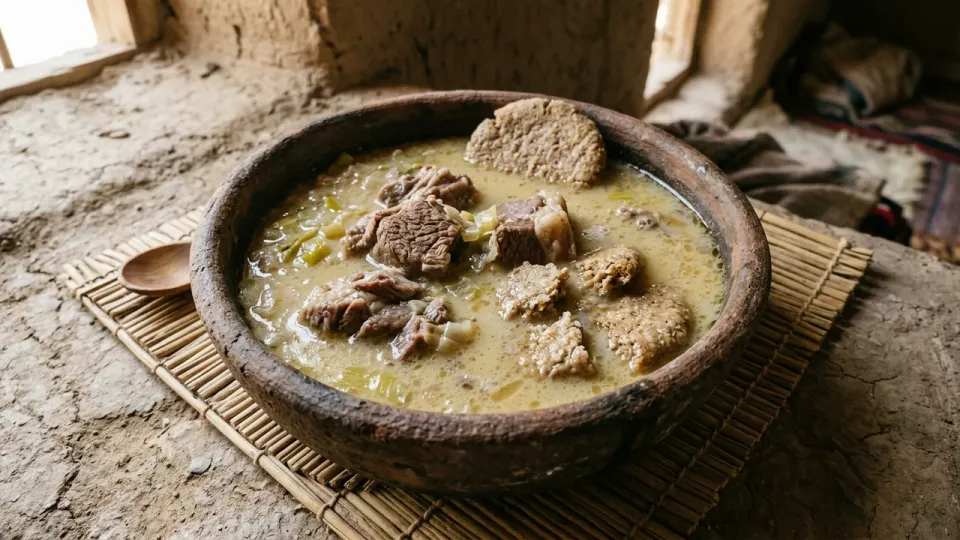
AI-generated recreation image of Babylonian lamb stew: braised lamb pieces, rustic barley cakes (risnātu), and alliums in a milky broth served in a coarse terracotta earthenware bowl on a woven reed mat

Ancient Mesopotamia

Babylonian Lamb Stew

Guided by m. puhādi (“Stew of Lamb”) on Old Babylonian tablet YBC 4644 (Recipe 12, obverse lines 31–32), this article presents a modern home proposal combining lamb, milk, grain cakes and alliums. It is distinct from the beet-based stew Tuh’u.
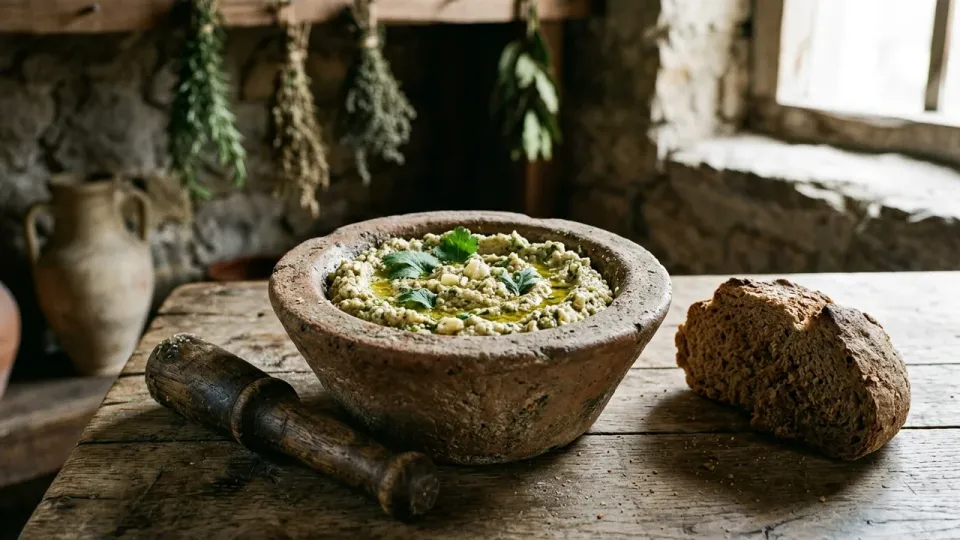
AI-generated recreation image of Moretum: rustic pestle-ground sheep cheese, garlic, and green herb paste served beside an Ancient Roman terracotta mortarium with country bread

Ancient Rome

Moretum

A modern proposal for pounding cheese, garlic and herbs, guided by the Latin poem Moretum and its farmer’s food preparation. Neither Virgil’s authorship nor an exact composition date is established here.

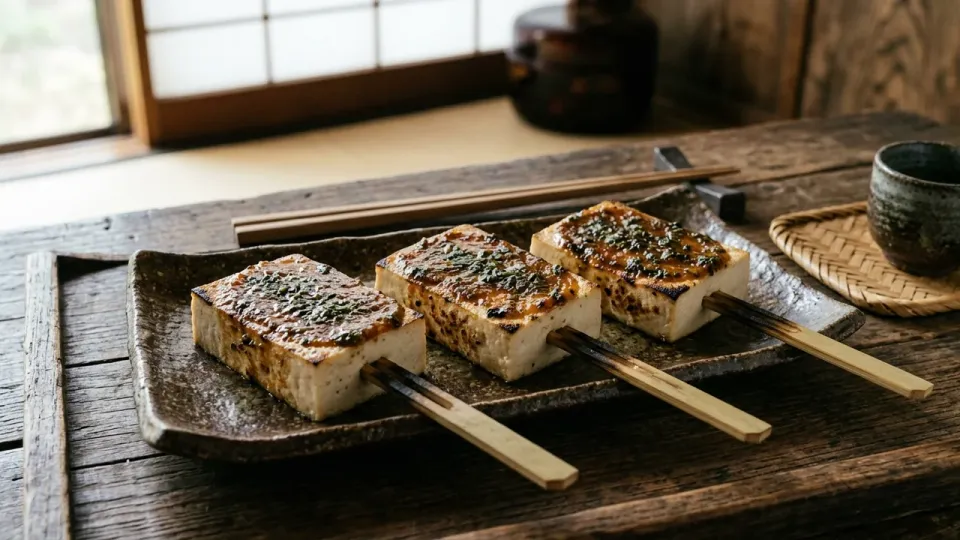
AI-generated recreation image of Kinome Dengaku: skewered broiled firm tofu glazed with rich dengaku miso blended with crushed young sansho leaves on a rustic Japanese ceramic plate

Edo Period, Japan

Kinome Dengaku (Miso-Grilled Tofu)

Kinome Dengaku appears in Tofu Hyakuchin, a Japanese cookbook published in 1782. Historical evidence is separated from modern changes.

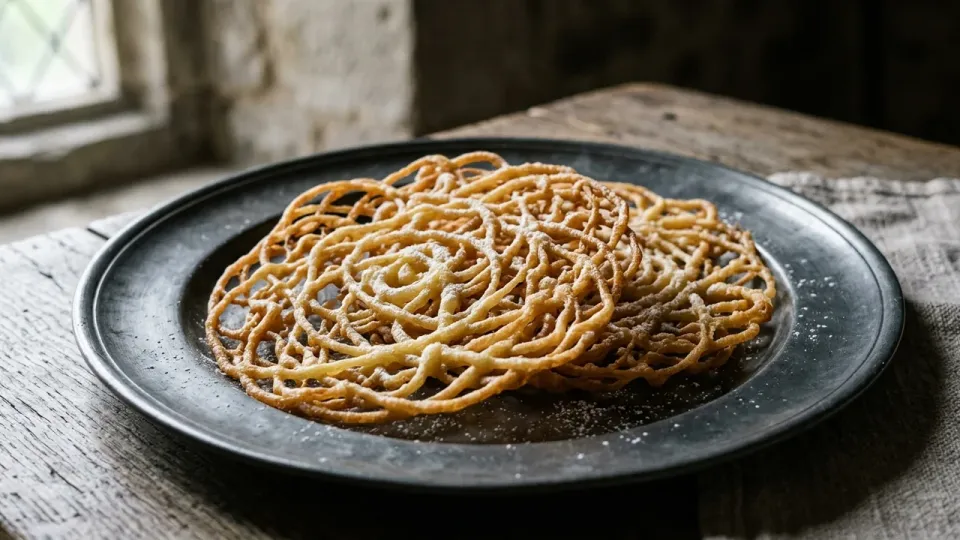
AI-generated recreation image of medieval French Crespes: delicate, golden lace-like fried fritters dusted with powdered sugar, served on a rustic pewter plate

Late 14th century (c. 1393, Paris, France)

Crespes

A crisp, medieval French fritter recorded in the late 14th-century Parisian household guide 'Le Ménagier de Paris', made by streaming batter through a pierced vessel into sizzling fat. An untested domestic recreation adapting this historical recipe for modern home kitchens with contemporary safety considerations.

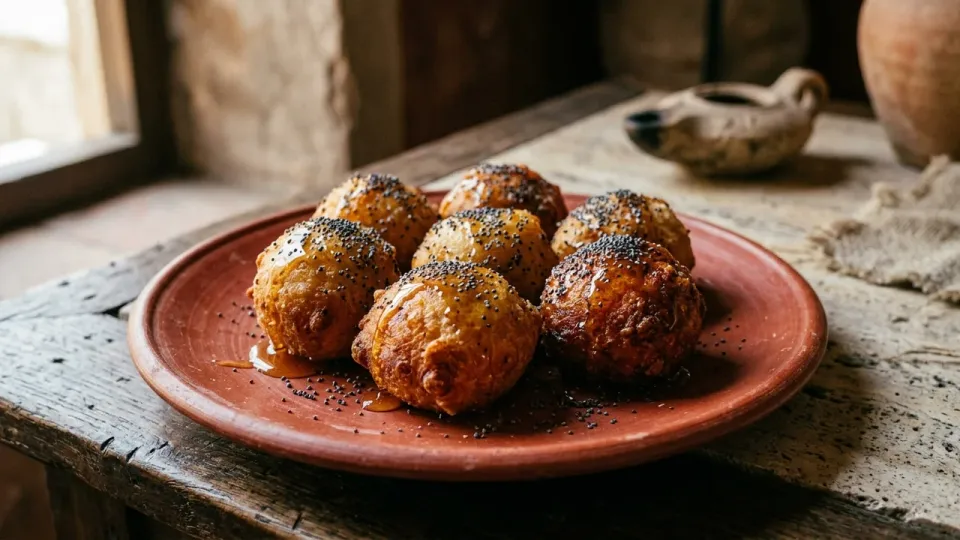
AI-generated recreation image of Globi: rustic golden fried cheese-and-semolina curd balls drizzled with honey and sprinkled with poppy seeds on an Ancient Roman pottery dish

Ancient Rome

Globi

Cato's On Agriculture, section 79, describes cheese and grain cooked in fat, finished with honey and poppy seeds. Semolina, ricotta and vegetable oil are modern substitutions.

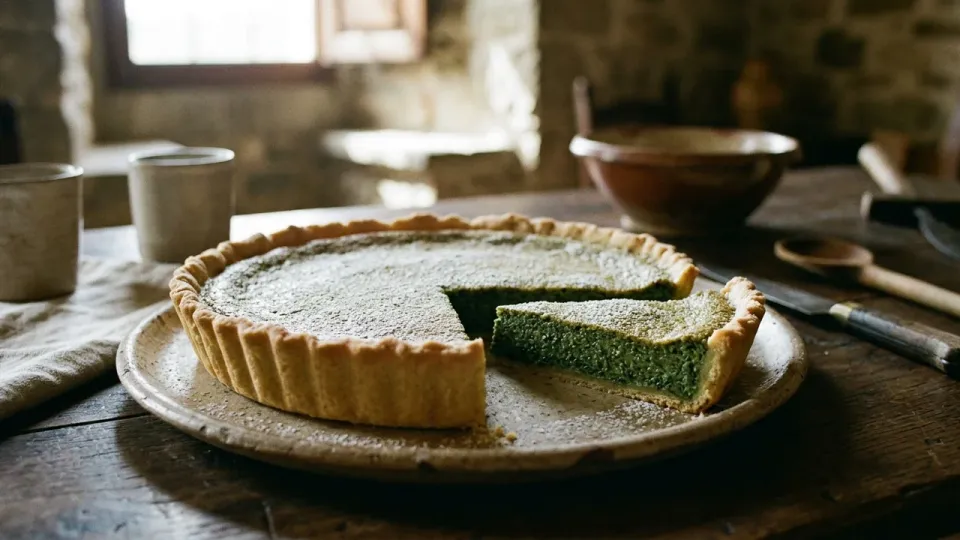
AI-generated recreation image of Herbolata: a round golden herb tart in a rustic ceramic plate, with one cut slice showing the vivid deep-green herb and cheese filling cross-section

Italian Renaissance (Late 15th Century; composition estimated c. 1465)

Herbolata de Maio — 15th-Century Italian Green Herb Tart

A vivid green Renaissance herb tart, 'Herbolata de maio' (May Herb Tart), recorded by master chef Maestro Martino. Made by extracting the fresh green juice of Swiss chard, sage, and parsley, then folding it into fresh cheese and egg whites for a seasonal spring preparation.

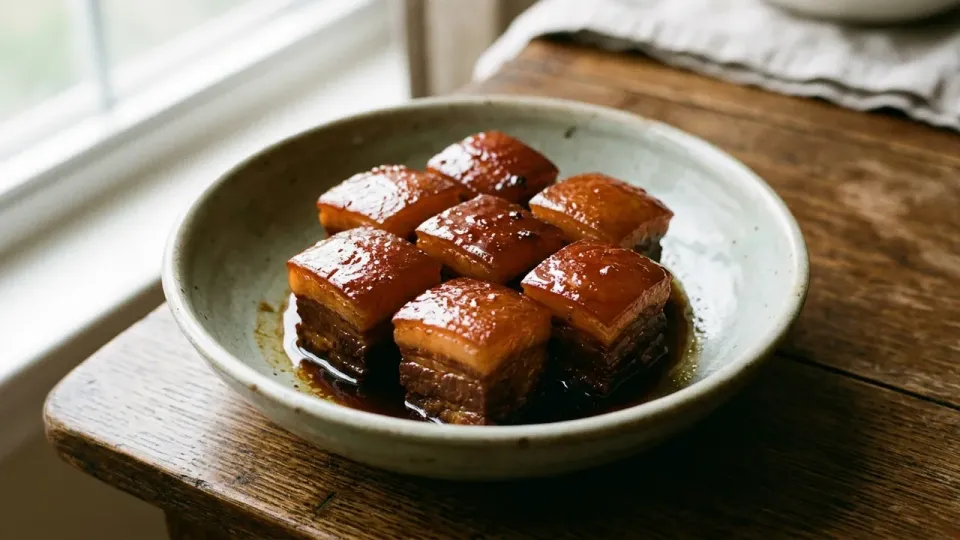
AI-generated recreation image of Hongwei Rou: square-cut pork belly cubes braised in Shaoxing rice wine and soy sauce to a glossy reddish-amber glaze in a simple stoneware bowl

Qing Dynasty China (1792)

Hongwei Rou (Suiyuan Shidan Red-Braised Pork)

Based on 'Three Methods for Red-Braised Pork' in Yuan Mei's Suiyuan Shidan (1792), this article presents pork belly slow-braised in rice wine, soy sauce and a little salt without caramelized sugar or star anise, separating Su Shi's Northern Song 'Ode to Pork' and historical uncertainties from a modern home adaptation.

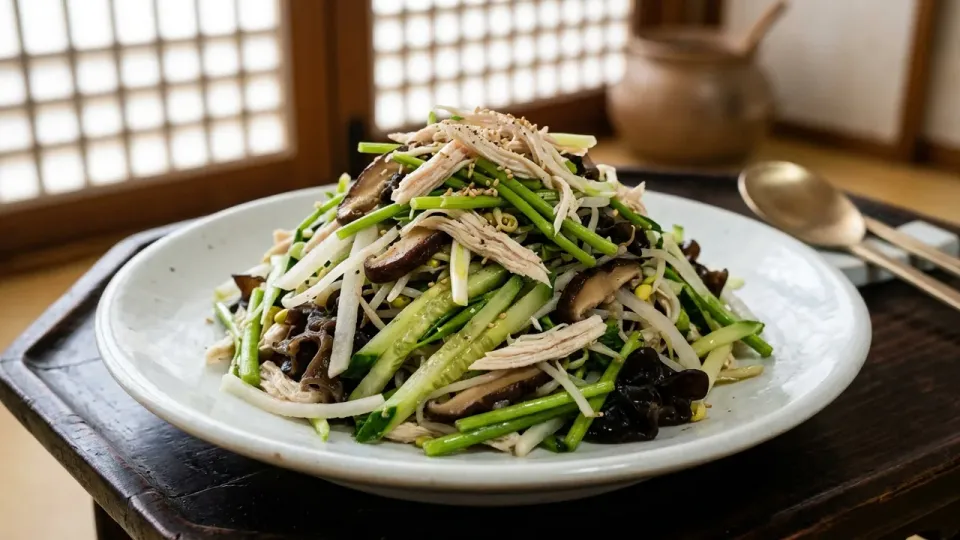
AI-generated recreation image of 17th-century Joseon Japchae: a vibrant mound of individually sautéed cucumbers, daikon, shiitake, wood ear, minari, and shredded chicken in savory glaze on a traditional white porcelain dish

Joseon Dynasty (c. 1670)

17th-Century Joseon Japchae (Mixed Vegetables with Shredded Chicken)

The authentic historical Japchae recorded in Lady Jang Gye-hyang's c. 1670 cookbook Eumsik Dimibang, containing no modern sweet potato glass noodles. Multicolored vegetables, mushrooms, and shredded meat are sautéed individually in sesame oil and soy sauce, then finished with a savory broth and bean paste sauce.

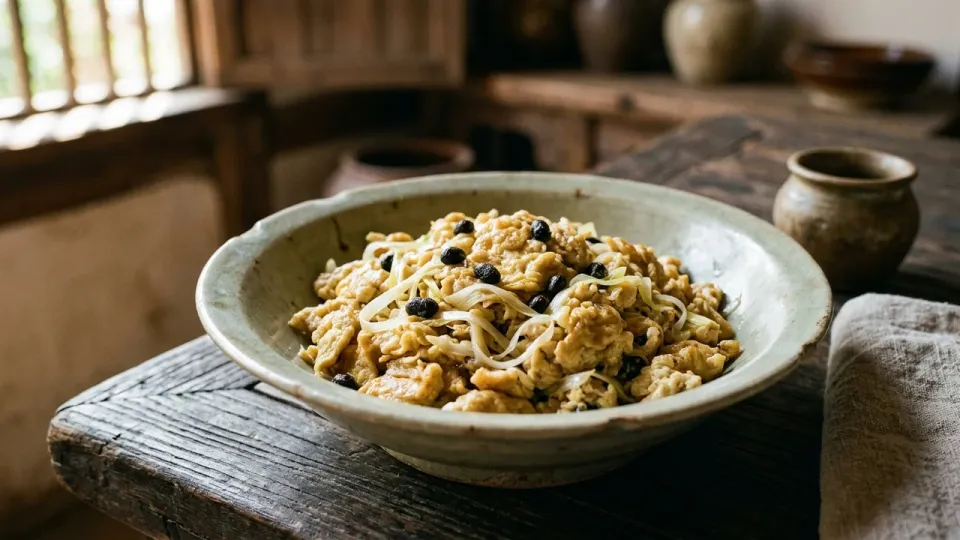
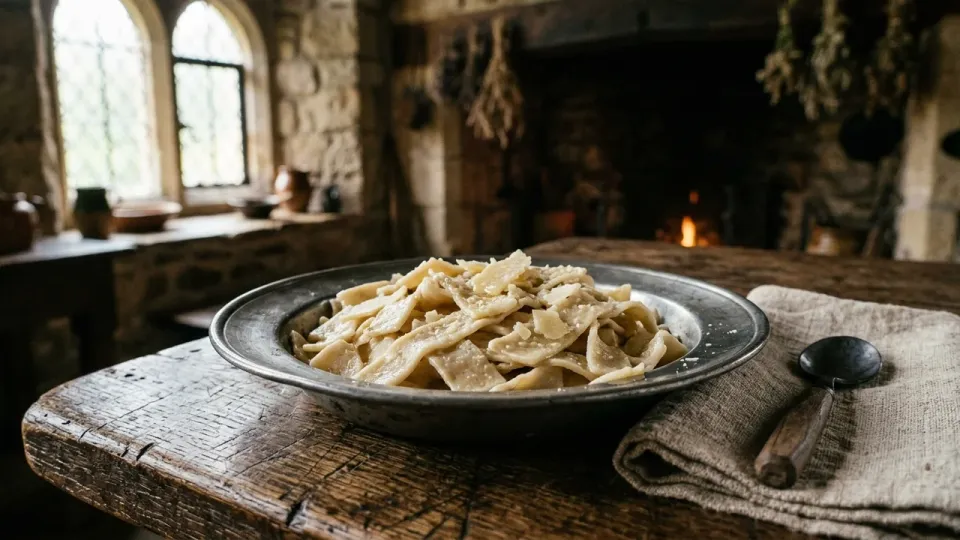
AI-generated recreation image of Macrows: rustic boiled flat wheat dough ribbons layered with grated aged cheese and melting butter in a medieval pewter dish

Late Middle Ages, England

Macrows

A Forme of Cury dish of thin dough boiled and layered with cheese and butter. The work of about 1390 is distinguished from the 1780 edition, and not equated with tubular macaroni.

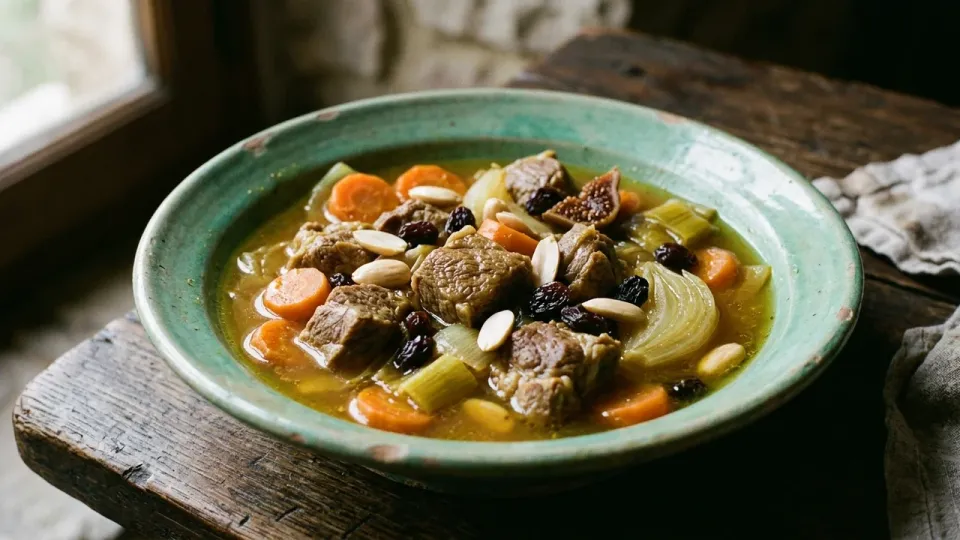
AI-generated recreation image of 13th-century Baghdadi Sikbaj: tender lamb stewed with carrots, onions, and leeks in a golden saffron broth, garnished with almonds, raisins, and dried figs in a rustic glazed earthenware bowl

Abbasid Baghdad (1226)

Medieval Baghdadi Sikbaj

The premier dish opening the 1226 Baghdadi culinary manual 'Kitāb al-Ṭabīkh'. Tender lamb simmered in a sweet-and-sour broth of wine vinegar and date syrup (or honey), featuring saffron, carrots, dried figs, raisins, almonds, and the floral fragrance of rose water from the Islamic Golden Age (an untested home adaptation).

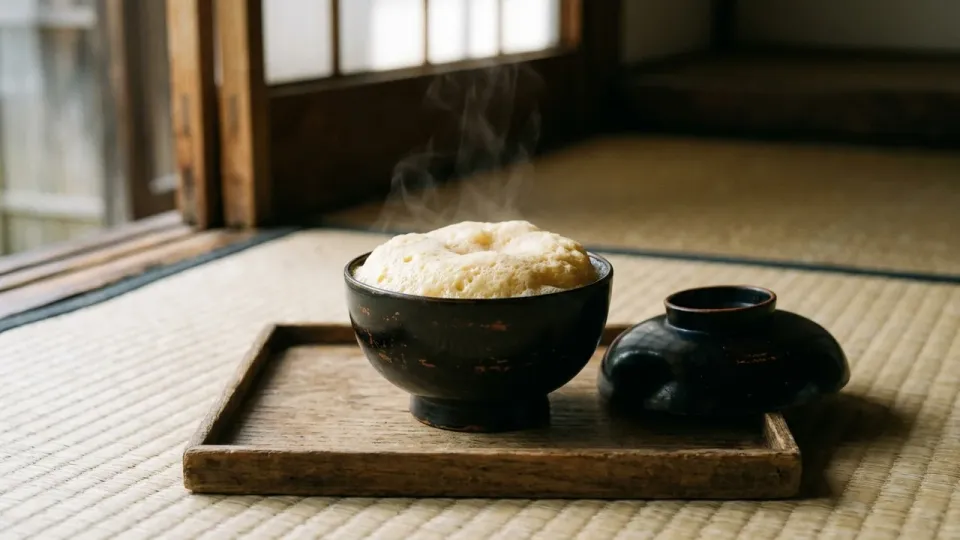
AI-generated recreation image of Tamago Fuwafuwa: gently steamed, airy cloud-like egg custard in an antique dark lacquer bowl on a plain wooden tray in an Edo-period setting

Edo Period, Japan

Tamago Fuwafuwa

An account of Tamago Fuwafuwa in a 1915 transcription of Ryori Monogatari. Uncertain dashitamari and heating methods are separated from a steamed modern proposal that omits irizake.

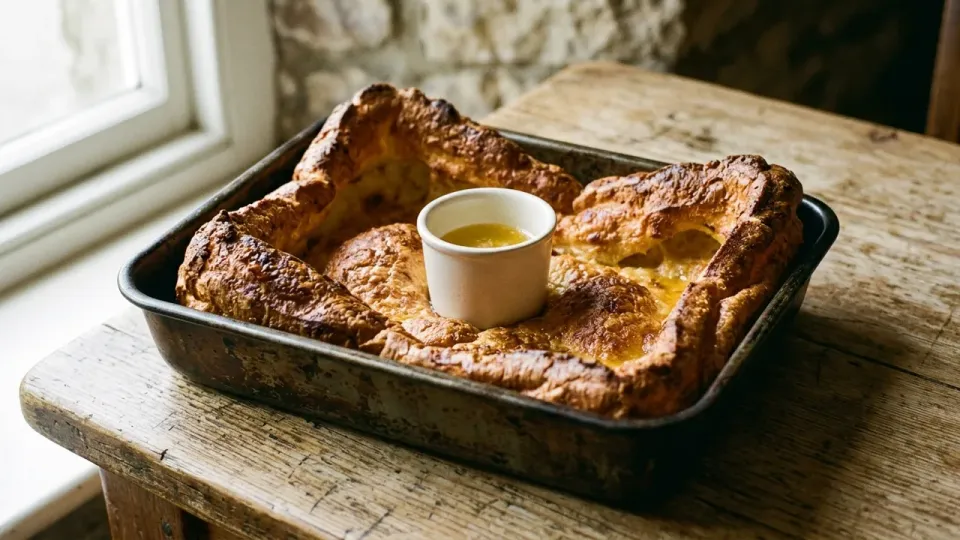
AI-generated recreation image of Yorkshire pudding: one unevenly risen, unevenly browned pudding in a well-used metal baking tin on a wooden table, with a plain cup of melted butter set in the middle

England, 18th century (1774 edition)

Yorkshire Pudding (Hannah Glasse, The Art of Cookery, 1774 edition)

Based on "A Yorkshire pudding" in Hannah Glasse's 18th-century English cookbook The Art of Cookery Made Plain and Easy (1774 edition), this article covers a batter of milk, eggs, flour and salt baked in meat dripping. It separates the documented method from the quantities and times set for a modern oven.

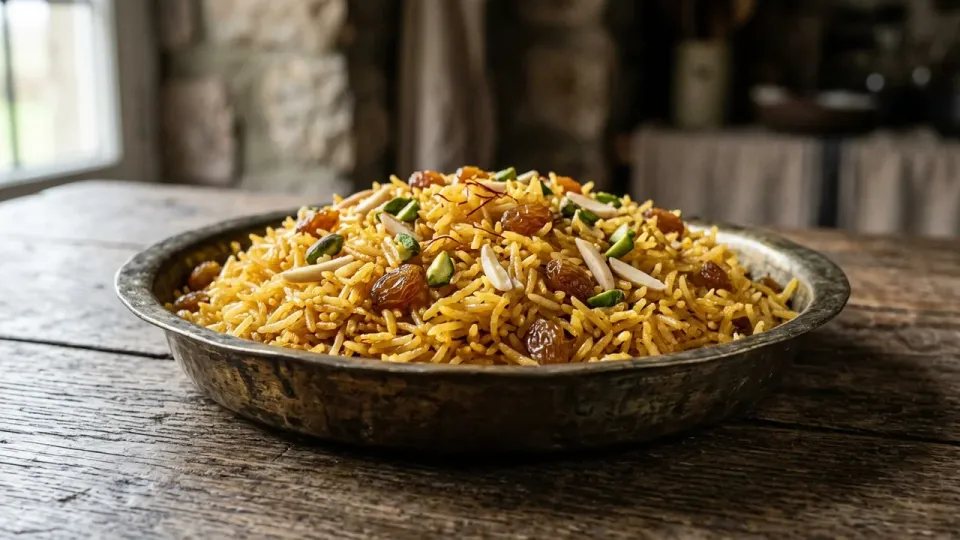
AI-generated recreation image of Zard Birinj: golden saffron sweet rice served in a rustic metal dish, naturally garnished with raisins, sliced almonds, and pistachios

Mughal Era (Late 16th century, estimated c. 1590)

Zard Birinj — Mughal Saffron Sweet Rice

A sweet saffron rice dish with ingredient proportions recorded in the late 16th-century Mughal imperial record 'Ā'īn-i Akbarī'. This untested modern home recreation reconstructs the courtly meatless preparation (sūfiyāna) made with saffron, clarified butter (ghee), dry fruits, and delicate spices.

Planned dishes are included. Unfinished recipes are not publicly accessible.